May
16

Can POWERbreathe improve breathing at high altitude?

altitude-trainingAt high altitude the air is ‘thinner’, containing less oxygen than at sea level. The higher we go, the thinner it gets. Climbing or skiing at high altitude places enormous demands upon the breathing muscles. In order to compensate for the thinner air, the lungs must work much harder, and exercise, which at sea level brings on nothing more than a slight increase in breathing, can push your breathing to its limits at high altitude. At 3km (3000m) the amount of oxygen in the air decreases by 30%, and at 5km its half that at sea-level. This means that at around 1km you begin to experience breathlessness during moderate exercise, and at 4km you feel breathless at rest.

At sea level, your ability to exercise is limited by the capacity of your heart to pump blood to the exercising muscles. At high altitude, you become limited by the ability to pump air in and out of the lungs.

Just to put things into perspective: whilst resting at sea level, you breathe about 12 litres of air in and out of your lungs each minute. At the summit of Mt. Everest (8848m) it requires almost maximal levels of breathing (in excess of 150 litres per minute) just to put one foot before the other. This level of breathing can be sustained for only a couple of minutes at a time.

Human beings tend to ‘learn’ from experience what is an appropriate level of breathing for a given exercise task. When there is a mis-match between your previous experience and your current experience (as occurs at high altitude), you get a heightened sensation of breathlessness. Also, if your respiratory muscles are working very hard, they can ‘steal’ blood from the legs to meet their own requirement for oxygen, thus impairing leg performance. Finally, all that respiratory work can lead to chronic fatigue of your breathing muscles, which also increases breathlessness and impairs performance.

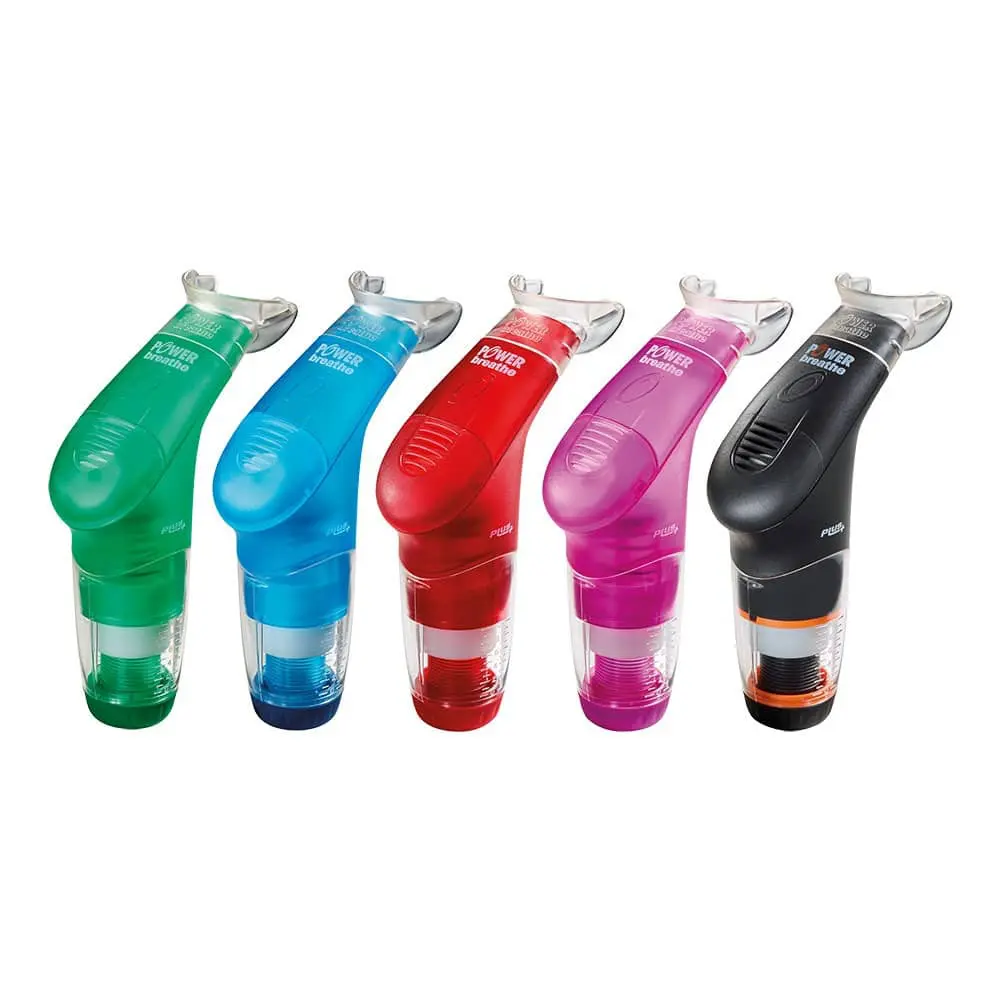
By training with POWERbreathe prior to trekking / climbing at high altitude, or a skiing trip, you can prepare your breathing for the rigours of the increased work of breathing, minimise fatigue and breathlessness, and improve performance and enjoyment. Short of spending a few weeks doing lots of aerobic exercise at 3000m, there’s not much else to rival POWERbreathe’s ability to get your breathing prepared for the mountains!

We would like to hear from you if you climb or ski at high altitudes.  Please leave a comment below. Why not join in the conversation with us on Twitter, Like us on Facebook too.

Technorati tags: Health

May
16

Kilimanjaro here we come with POWERbreathe in tow

Hello, my name is Bernie Almond and my wife and I decided we wanted to climb Mount Kilimanjaro. We are planning to do this in August but we knew we needed some extra support to strenthen our lungs especially and we didn’t want to make a mess on the mountain if we suffered any altitude sickness.

This quest prompted us to contact POWERbreathe as we had heard so much about them and how they help strenthen the respiratory muscles and lungs.  So the POWERbreathe’s arrived and what funny looking devices.  As soon as we put them in our mouths and looked at ourselves in the mirror we just burst out laughing.  However, we knew how important these little beauties would be for our training so we went into serious mode.

So 2 weeks into the training with POWERbreathe and we are both now accustomed to using  the breathing trainer device. We even consciously complete the 30 breaths twice daily as we get up each morning and before we go to bed. In fact we have both increased the resistance already as we feel our breathing is getting stronger.

We certainly think we feel less breathlessness when walking up hills – during May we have some longer arduous walks planned so will be able to assess the benefit better then – but so far so good.

15th May, 2012

“Just returned from Walk the Wight a 26 mile, 10 hour jaunt across the Isle of Wight – we flew up the hills, breathing has certainly got easier and more efficient since starting to use the power breathes! Both Helen and I have now notched up the resistance in preparation for some more strenuous hill climbs in the lake district next month – as this rate Kili will be a breath of fresh air! ”


Please keep checking back to the POWERbreathe blog for our updates. Why not browse the great range of products that can help you with your breathing training

Thanks Bernie Almond

May
16

Andy and Lotte train in Lanzarote with POWERbreathe

After a week in the beautiful Lanzarote we finally came back down to earth when we arrived back to England and saw the rain. However, we had a great time out there and things couldn’t have gone better for us.  Speaking for myself I feel a lot fitter since leaving Lanzarote than I did when I arrived, the tan probably helps me feel better and motivated too.

I think it’s easy when you set aside a block of time for serious training to have unrealistic expectations of what you might achieve. Perhaps I would have trained longer and harder had I not had such debilitating gastric issues in the preceding days before flying out, but as a result I arrived only wanting to get back into training. Therefore, what I considered we achieved over the past week exceeded my expectations. Either way, the outcome has left me pondering this statement:

“Whatever happens is the only thing that could have”

Not wanting to get into a deep philosophical discussion of what that might entail just now, instead, I’ll talk through our week. We arrived on Thursday morning, and instead of renting the bikes from Friday-Monday leaving two days to relax after, we rented them from Saturday-Tuesday giving me and extra day to build my strength for the days ahead.

We started with a 4 mile run on Friday, even though I was not feeling 100% and boy the trails we took were not the best but just training again felt great.  More literally, Lotte and I also ensured we did our POWERbreathe training, choosing to do the 30 breaths after our run, to work the already part-fatigued inspiratory muscles. Not only does this add an aspect of specificity to the training, but it is also a good way to get it out of the way. I tend to do most of my training in one big block in each day, so putting at least part of the POWERbreathe practice actually into that training block seems to lessen the logistics of performing the twice daily regimen.

Saturday we went for a 50 mile ride followed by 30 minuted of running. Talk about punishing but it was worth it.  Sunday was the big Ironman course and I have to say I did find it a bit of a struggle thanks to the scorching heat.  After this gruelling course we decided to take Monday off, we needed that to recover.

Lotte and I managed our POWERbreathe training every morning and evening, and having performed the twice daily breaths before, and also having only ‘dabbled’ before, it is also clear that the rapid progression comes from the regularity of practice. No surprises there then. This time, I have opted to also perform half of my daily practice standing up, without the inspiratory muscles supported. Although these attempts seem significantly harder initially, and some adjustment of the level is required for the standing, I hope that the hard work will pay dividends. For now, I look forward to building on the both the momentum and hard work (21 hours of cycling in 4 days) established out here in Lanzarote.

To read a full account of Andy and Lotte’s Lanzarote experience go to my blog

May
14

National Walk To Work Week – Put the spring back into your step

walk to work weekThis week is National Walk To Work Week. If you ever needed an excuse to get walking -it’s here!

Walking is a great way to stay trim and helps keep your heart healthy. It saves on petrol and bus fares, and is better for our planet. It’s easy to fit some more walking in to your working week. Whether it’s making changes to how you travel to work, or getting out more at lunchtimes.

Walking is also a great form of exercise if you suffer from any respiratory illnesses including asthma, COPD or Emphysema

Between 14-18th May employees are encouraged to leave their cars at home and put national transport aside to get your blood pumping! Or if that’s not suitable for you, you can make time at lunch or a break to take a wander. Take your colleagues along and enjoy it!

We’re all sat at our desks long enough, so why not take the chance to stretch our legs, get fit and burn out the carbon footprint all in one go?

Many of the best writers including Charles Dickens and Wordsworth went on walks to get inspiration – obvioulsy this showed in the books they wrote!

And speaking of inspiration: ‘Walking Works’ asked musicians like Jack Johnson their favourite songs to walk to. Why not make up your own walking playlist and get listening on your stroll?

Once you’re back in the office you’ll really feel energised and realise that walk and work actually can go together!

Please feel free to comment on this blog and tell us about your ‘Walking to Work Week’. Don’t forget to follow us on Twitter, Like us on Facebook and subscribe to our feed.

Technorati tags: Health Lifestyle

May
10

Team POWERbreathe UK – Andy Bruce & Charlotte Carritt prepare for Challenge Roth and Transalpine-Run

Andy and Lotte are endurance runners. Andy has previously raced in the Goretex Transalpine Run – a multi-day footrace across the Alps of approximately 270-315km in 8 days over mountainous terrain. With the prospect of running Challenge Roth and Transalpine-Run ahead of them, incorporating POWERbreathe seemed to be essential for strengthening their breathing muscles to improve their stamina for the challenge that altitude poses on their breathing comfort.

Having experienced the effect 3000m altitude had on their breathing, Andy contacted us to see if he and Lotte would benefit from using POWERbreathe to improve their breathing strength and stamina, as well as improve running performance . Well here’s Andy’s first blog about training for these two endurance events, including their POWERbreathe training.

“So this week hasn’t turned out quite as planned, but it could be worse.

On Monday, I (more or less) completed my 30 days of running. (30 mins running every day for 30 days); a small challenge I had taken up for a good boost to my run training in the run up to Roth. I say more or less as I had technically let slip on the 26th (after zero sleep from a poorly timed uni assignment) but made it up with a double run on the Friday. Technical completion or not, I had achieved the desired outcome, I was running well, and had a good mix of interval work in there too. As I am sure you will realise, April had also been a bit soggy, so I was pleased that I had stuck it out.

All I had to tackle on Tuesday was my final exam of the year, before I could look forward to getting ready for a week in Lanzarote, training (but also relaxing) with Lotte.  However, on Monday night, I came down with a nasty bought of gastroenteritis. It was then a race to recover for some decent training in Lanzarote.

After 3 days off, I guess this signals the start of the last big push before Roth, and then of course Transalpine. In relation to the latter, further good news comes in the form of team sponsorship by POWERbreathe. Lotte and I will now officially run as Team POWERbreathe UK and blog on our training with the devices in the run up to the race. I have been using mine for a while, and have noticed significant benefits in my breathing during swimming and during interval work, but really expect to reap the rewards when it comes to running at altitude. Hopefully we will both be able to give a balanced and realistic account of what it is like to train for triathlon and multi-day eventing using POWERbreathe, and also an insight into some useful hints and tips regarding its usage.

Anyway, that’s enough for now. Off for some dinner and then to bed before some biking and running tomorrow.”

Andy

You can read Andy’s full report on his own blog about endurance racing and sport psychology.

Everyone here at POWERbreathe Towers would like to wish them well, and if you too would like to send your good wishes, please leave a comment here.

May
10

Anthony Ogogo – first experience of training with my POWERbreathe

Firstly I want to thank the guys at POWERbreathe for sending me a POWERbreathe to aid me in my training block leading up to the Olympic qualifier. It was very kind of them.

Training three times a day like we do on the GB Boxing team, I wanted something that could help me with my breathing and my general fitness but without physically exerting my body any more than the three gruelling sessions. So my friend advised me to try a POWERbreathe.

In typical Anthony Ogogo Ultra competitive fashion I put it on a level 7, thinking that as I was an elite athlete I’d already be good at it. I was wrong. I was surprised how hard it was maintaining a good technique and so started at level one. I did manage to get up to level 6 and 7 in the 4 weeks I was using it leading up to the qualifier, whilst maintaining a good technique. Something that I was nowhere near being able to do the first time I used it, which shows my breathing capacity definitely got better.

Thanks again POWERbreathe, Anthony.

You can read about Anthony’s victory in European Olympic qualifier in Turkey in our previous blog.  You can also read more about Anthony on his website , follow him on Twitter or visit his YouTube channel.


May
09

POWERbreathe in new report that describes some of the ways in which research has helped Team GB prepare for London 2012

POWERbreathe in Uni Week Research ReportPOWERbreathe has been included in a report that showcases the impact of universities on the Olympic and Paralympic Games, and on UK sport in general.

The aim of the report was to raise public awareness of the wide and varied role of the UK’s iniversities. Professor Alison McConnell and her team’s research into breathing training and the resulting development of POWERbreathe, which is now widely used by elite athletes, is highlighted in the report.

POWERbreathe has been used by Olympic and World Champions, including England’s 2003 Rugby World Cup winners (as well as their Australian rivals in the final) and is also employed in medical settings to treat patients with breathlessness.

Chief Executive of Universities UK Nicola Dandridge said: “It is sometimes easy to forget when you watch an athlete or team compete just how much preparation has gone into their performance. This isn’t simply a question of training schedules and practice. These days, cutting-edge university research is used to support every aspect of Olympic sports – from nutrition and health to equipment, physiotherapy, rehabilitation and of course performance.”

Copies of the full report, ‘Supporting a UK success story: the impact of university research and sport development’, are available on request or for download from www.universitiesweek.org.uk

Read the full news story on the Brunel University website.


May
03

What is inspiratory muscle training

Respiratory SymptomInspiratory muscle training also known as IMT is a regimen of breathing exercises that aims to strengthen the respiratory muscles in our body to make it easier for us to breathe comfortably. IMT can be used specifically for patients who suffer from any form of respiratory illness including emphysema, bronchitis, asthma, dyspnoea, chronic obstructive pulmonary disease (COPD) or any other breathing illness.

These types of illnesses have been shown to weaken and even deteriorate muscle bulk, including the muscles of the respiratory system, thereby depriving the body of necessary oxygen. This training is designed to strengthen and rebuild those muscles with controlled breathing exercises. Studies have also shown that IMT may also increase endurance during cardiovascular exercise or in high performance sports such as tennis, rugby and football.

During a normal breath, a person will typically use between 10 and 15 percent of his or her useable lung capacity. With respiratory muscle training, a person typically can increase the amount of useable lung capacity. Deeper breathing uses a bit more energy but at the same time also allows more oxygen to enter the bloodstream with each breath while strengthening the breathing muscles.

As one of the most popular respiratory training techniques, inspiratory muscle training can be performed at home with a breathing training device, at a doctor’s office, or at a rehabilitation centre. Devices provide resistance to force the diaphragm to expand more during breathing. Inspiratory Muscle Training (IMT) is scientifically proven to benefit patients with respiratory illness and healthy people.

If you are looking to train your respiratory muscles to work better when you breathe then using an inspiratory muscle training device twice a day can certainly help you to a much healthier lifestyle and more importantly help you with your breathing. A good pair of lungs helps you on your way to a better quality of life.

May
02

Alphamed presents POWERbreathe at Rimini Wellness Expo

Alphamed, our POWERbreathe distributors in Italy will be presenting POWERbreathe at the seventh Rimini Wellness Expo 10 – 13th May 2012.

Alphamed have been talking with Luca Piancastelli, personal trainer and creator of a new method of training called Walking Program®, about incorporating POWERbreathe into his Walking Program® for additional benefits.

The Walking Program® is a program for people who are embarking on a fitness regimen for the first time and is a structured workout that takes place on the treadmill, to music – a choreographed treadmill workout. POWERbreathe would make an ideal addition, helping participants develop their breathing strength and stamina to maximise their workout.

Luca Piancastelli’s Walking Program® incorporating POWERbreathe is scheduled in the events program on each of the 4 days.

So a big thank you to Alphamed and Luca Piancastelli, and if you’re one of those taking part in the Walking Program® please tell us what you thought by leaving a comment here.

May
02

5 health killers in our daily life

There are many substances and situations that exist in our daily life and environment that can make us sick.

Here are the top five:

  1. Allergens, VOC, chemicals and microbials in the air you breathe can lead to breathing problems, allergies and sickness.
  2. Drinking water contaminated with heavy metals, chemicals, disinfection byproducts and pesticides can lead to digestive problems and other illnesses.
  3. Pesticide ladled and GMO food can lead to a weak immune system and sluggish body functions.
  4. Beauty, hygiene and body products can be loaded with chemicals, parabens and other toxic ingredients that are absorbed though your skin and make you sick.
  5. Ineffectively dealing with stress can lead to low energy, exhaustion and sleeplessness.

Please comment with any other substances which you think are causes of making us sick.  Please also feel free to join in the conversation with us on Twitter, Facebook and don’t forget to subscribe to our feed.

Technorati tags: health, lifestyle

Older posts «