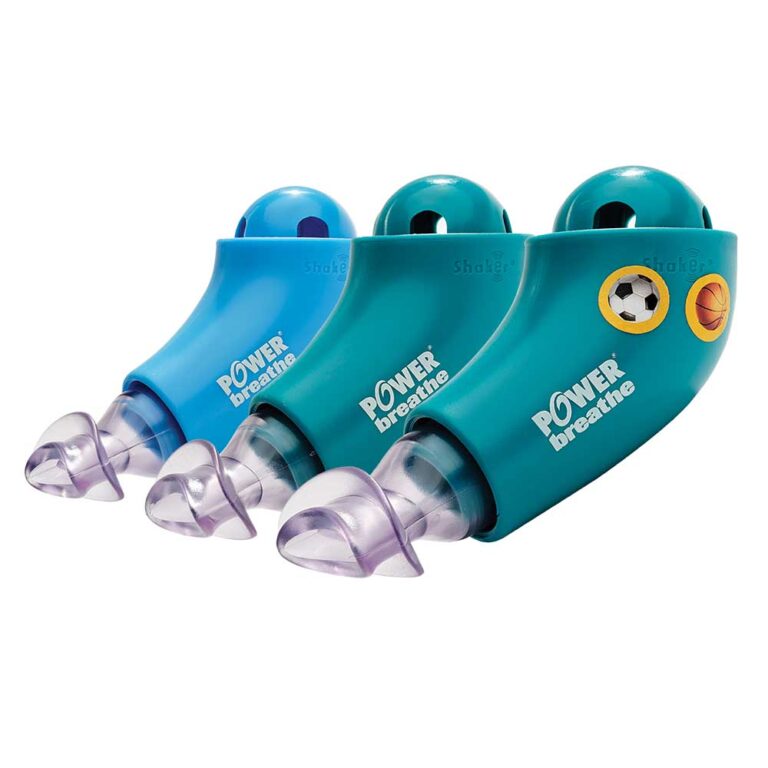
Expiratory muscle strength training exercises use repeated exhalations against a resistance or ‘load’ to strengthen the muscles used for breathing out. A consistent training routine using a threshold breathing training device like the POWERbreathe EX1 can result in several benefits for most people.
Breathing out usually happens naturally, without any thought and is largely passive. The diaphragm relaxes, and the lungs naturally recoil. Forceful exhalation relies on muscles including the abdominals and the internal intercostal muscles and just like other skeletal muscles around the body, these muscles can be trained to become stronger. Think of expiratory muscle strength training like a workout for your exhalation muscles.
This article will provide a practical guide to expiratory muscle strength training, also known as EMST. It will highlight the benefits of strengthening the muscles involved in breathing out and who should consider starting EMST.
Why is Expiratory Muscle Strength Important?
Expiratory muscle strength is important for activities that require you to breathe out. This might not happen often during general everyday activities. But a forceful out-breath is involved in effective coughing and airway clearance. Expiratory pressure also plays a role in speech and swallowing.
People who exercise, including professional athletes, rely on expiratory muscles because breathing becomes faster and more forceful during exercise. Singers and musicians who play woodwind instruments may also benefit from regular expiratory muscle strength training exercises to gain better control of their breathing.
EMST can also benefit people with certain health conditions, including neurodegenerative conditions such as Parkinson’s disease, stroke and multiple system atrophy.
In a 2023 study by Srp et al, participants with multiple system atrophy completed an eight-week expiratory muscle strength training programme using a threshold trainer. This included five sets of five forceful expirations, five days per week. Maximum expiratory pressure increased by 32% following the training programme, demonstrating a significant improvement in expiratory muscle strength.
How to Perform Expiratory Muscle Strength Training Exercises
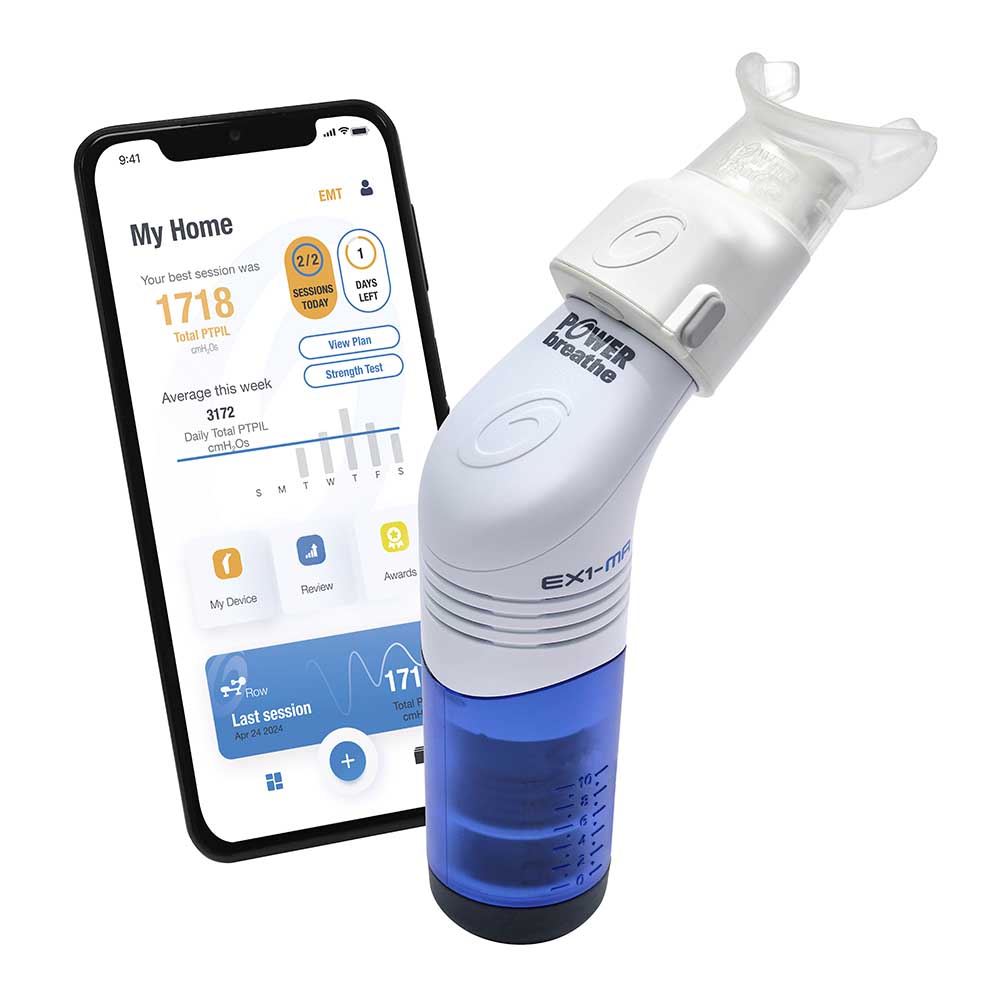
The POWERbreathe EX1 is a world-leading expiratory muscle strength trainer. It offers the widest range of resistance levels on the market and is easy to use at home.
Using the EX1, follow the 5 x 5 x 5 protocol. This involves five forceful exhalations, five times per day, five days per week. To use the device, follow the steps outlined below:
- Sit or stand comfortably and hold the EMST device upright
- Take a full breath in, filling the lungs before using the device
- Place the mouthpiece in your mouth and breathe out as quickly and forcefully as you possibly can. You should notice that it is harder to breathe out than normal.
- Keep going and squeeze as much air as possible out of your lungs
- Repeat steps 2, 3 and 4 enough times to complete the 5 x 5 x 5 protocol
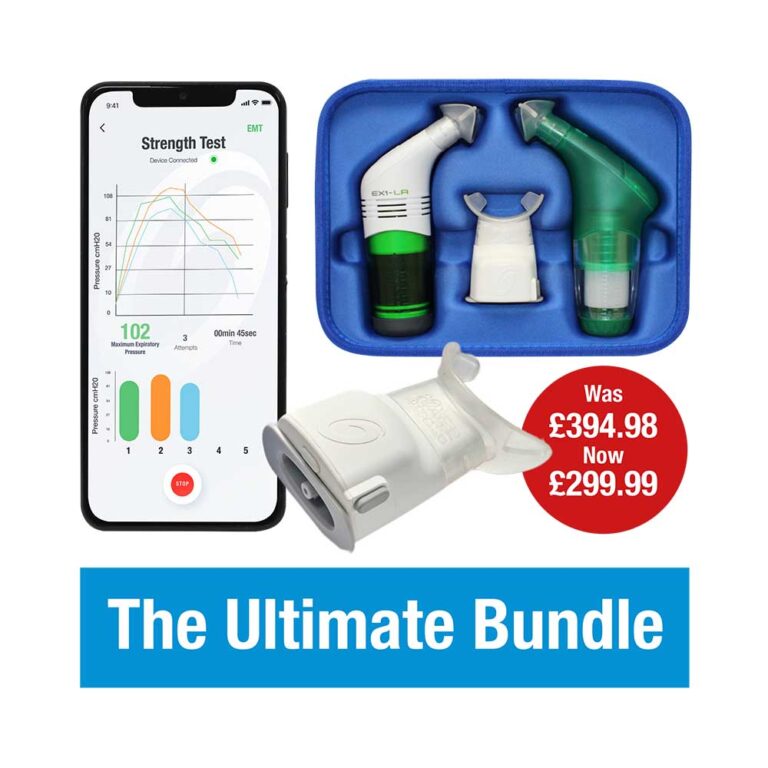
You can take your expiratory strength training with the POWERbreathe EX1 to the next level by using the POWERbreathe Smart Adaptor and ActiBreathe App. This will provide real-time feedback and calculate the appropriate training level for your needs. The app gives comprehensive analysis on your phone or tablet, including a measurement of your maximum expiratory pressure (MEP).
Can you Perform Expiratory Muscle Strength Training Without a Device?
It’s possible to activate and use your expiratory muscles without specialist equipment, but there is an important difference between activating a muscle and structured strength training using a threshold trainer like the POWERbreathe EX1.
A threshold device has a precisely calibrated spring loaded valve that will open when a certain amount of force is generated. The load can be controlled and progressively increased as and when needed throughout training. . This follows the exact same principle as other muscle strength training, like using dumbbells for your biceps. Over time, the expiratory muscles strengthen and the weight can be increased.
There are four different models in the EX1 range: the Medic, Light, Medium and Heavy Resistance devices.
Developing Expiratory Muscle Strength Training
EMST has been studied for decades. One of the leading researchers in this area is Dr Christine Sapienza PhD, CCC-SLP. Her work has helped shape the science and clinical application of respiratory muscle strength training. Dr Sapienza has authored more than 100 peer-reviewed publications during a career spanning around 30 years. She recently presented a webinar exploring the foundations and application of Respiratory Muscle Strength Training, focussing on EMST/EMT, which you can watch here.
Christine has been widely recognised for her contribution to the development and understanding of EMST. In 2026, Dr Sapienza joined POWERbreathe as Education Lead for the USA. She will support professional education around respiratory muscle strength training through workshops, webinars and more. If you have any questions about EMST or would like to speak with Dr Christine Sapienza, you can contact us here.
If you’re interested in performing expiratory muscle strength training exercises with the POWERbreathe EX1 device, explore the full range today to find the resistance level that best suits your training needs.