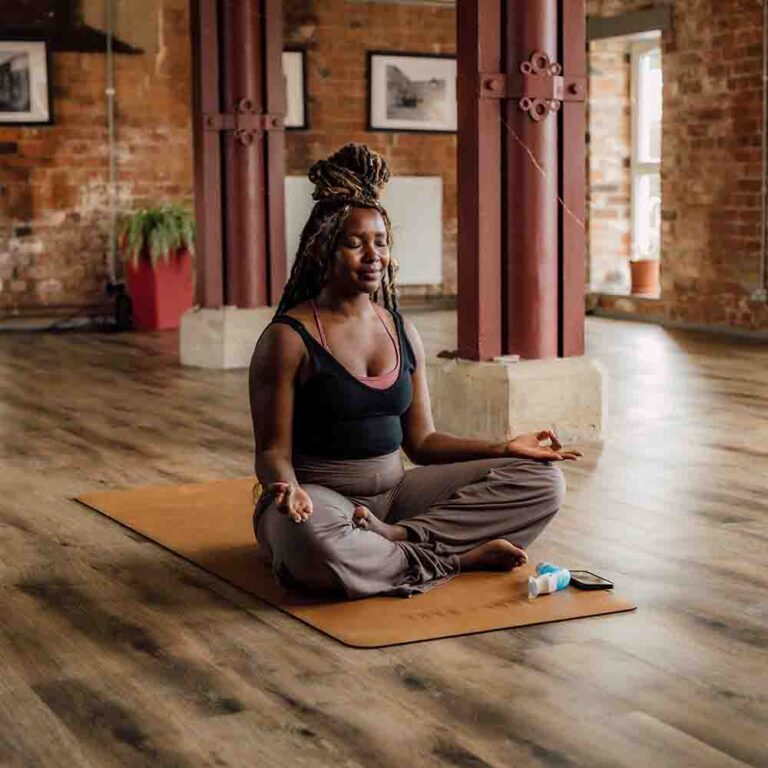
Breathing activities for anxiety provide a practical way to focus attention and relax muscles. Activities include box breathing, the 4-7-8 breathing technique and deep diaphragmatic breathing. They will not remove the cause of anxiety nor replace any long-term treatment agreed with your GP, but they may help alleviate some of the physical symptoms during an anxiety attack.
Anxiety does not just affect your thoughts. It can also change how your body feels and the way it reacts to certain situations. It can affect how you breathe, and breathing well is key to reducing stress and anxiety.
This guide highlights some of the best breathing techniques for anxiety. Many people find real value in breathwork for stress relief and emotional regulation. One important thing to note: breathwork and breathing training are not the same thing, but doing them together can often yield the greatest results. And herein we will explain how inspiratory muscle training with POWERbreathe can help build a better deep breathing habit when you’re feeling stressed out.
How Does Anxiety Affect Your Breathing?
When you feel threatened or anxious, your body releases stress hormones to prepare for a response. This may cause your heart rate to increase and your muscles to become tense. You may notice your breathing pattern change as it speeds up and you’re potentially taking deeper breaths. This is the body’s fight or flight response.
Some people begin breathing higher into the chest instead of allowing the diaphragm and abdomen to move naturally. Others breathe more quickly or feel as though they cannot take a satisfying breath. Breathing like this can trigger several other symptoms. These may include;
- Feeling light-headed or dizzy
- Tingling in the fingers or lips
- A tight or uncomfortable feeling in the chest
- Breathlessness
- Feeling faint
- A racing heartbeat
This is why many people who suffer from anxiety search for mindfulness breathing exercises. The sensation may be alarming, which causes you to focus more on your breathing. This can potentially create a vicious circle. Controlling your breathing using breathing activities for anxiety can help interrupt this cycle. It can also give you something else to focus on, rather than the original trigger.
(Speak to your GP or healthcare professional if you have concerns about your symptoms)
Can Mindfulness Breathing Exercises Help with Anxiety?
The NHS recommends calm breathing exercises as one of the self-help methods to manage stress and anxiety. Deep breathing exercises are clinically proven to help you control your heart rate, to bring about relaxation by calming the body’s stress response. A small randomised controlled study involving hospitalised COVID-19 patients found that guided breathing exercises reduced reported anxiety and stress.
“The Depression Anxiety Stress Scale-21 (DASS-21) questionnaire was administered before and after the intervention to evaluate changes in anxiety, stress, and depression levels. The intervention significantly reduced anxiety and stress scores.”
Sheikh et al. (2024)
However, breathing activities for anxiety should be used as a support tool rather than a cure. Always seek help with your GP if you are struggling.
What are the Best Breathing Techniques for Anxiety?
Different mindfulness breathing exercises work for different people. You may have to go through a trial-and-error process to find out which ones work best for you and which you are most comfortable performing. But generally speaking, the best breathing techniques for anxiety are usually the ones you find easy to perform.
Try each of the following exercises when you are already feeling reasonably calm. This can make breathwork easier to use when you begin to feel anxious. During an attack, you may find it hard to focus on your breathing, so the easier it is to perform, the better.
Deep Diaphragmatic Breathing
Deep diaphragmatic breathing is all about making sure you are using your diaphragm, the primary muscle used for breathing, correctly. Instead of lifting the shoulders and breathing mainly into the upper chest, the abdomen should expand gently as you breathe in.
You may find this breathing exercise for anxiety challenging to start with because it may go against the way you breathe normally. With practice, it should become easier to perform each time. You will find it easier and more effective to use this exercise when sitting in a supportive chair or lying down.
- Relax your shoulders and loosen any restrictive clothing.
- Place one hand on your upper chest and the other on your abdomen.
- Breathe in gently through your nose.
- Ensure that your stomach moves out. You should notice your hand on your abdomen move up. The hand on your chest should remain in the same position.
- When breathing out through pursed lips, move the stomach in. The hand on your abdomen should lower.
- Continue for between three and five minutes.
Do not push on your abdomen during this exercise. The movement should be comfortable and generated from the muscles themselves. The exercise encourages slower, deeper breaths using the diaphragm correctly. These can reduce the rapid and shallow breathing that occurs during anxiety.
By ensuring the diaphragm does most of the work, breathing may feel more controlled and efficient. A steady, relaxed exhale may also help ease feelings of breathlessness and support a greater sense of calm.
Box Breathing
Box breathing is a simple mindfulness breathing exercise that splits each breath into four distinct stages. It is sometimes called ‘square breathing’ because the four stages can be imagined as the sides of a square. The predictable pattern can help redirect attention away from anxious thoughts. Follow the steps listed below to perform this breathing exercise.
- Breathe in gently for a count of four.
- Hold the breath for a count of four.
- Breathe out slowly for a count of four.
- Wait for a count of four before breathing in again.
- Repeat the sequence four or five times.
Breath-holding can feel uncomfortable for some people, especially during heightened moments like an anxiety attack. If you feel more comfortable using a count of two or three, then you can do that. Box breathing is not about seeing how long you can hold your breath for. It’s about feeling under control and relaxed.
The 4-7-8 Breathing Technique
Many people use the 4-7-8 breathing technique to relax and focus. Once again, it may take a couple of tries to perfect this breathing activity for anxiety, but it’s something you can pick up quickly once you get the hang of it.
Start by inhaling quietly through your nose for four counts. You should feel like your abdomen is filled with air. You should then hold your breath for seven counts. Then, through pursed lips, slowly exhale through your mouth, making a whoosh sound for eight counts.
The longer exhale is the crucial aspect. This is the part that will calm you down. Your heart rate and blood pressure will increase with every inhale. The opposite happens when you exhale. The result should leave you feeling more relaxed and less stressed, which is why it’s one of the best breathing techniques for anxiety.
How Often Should You Practice Breathing Activities for Anxiety?
Breathing activities for anxiety are generally easier to use when they have already become familiar. Rather than waiting until you feel anxious, practise your chosen exercise during a calmer part of the day.
You could begin with three to five minutes once a day. You will probably find it easier if you focus on one breathing exercise until you are familiar with it, rather than trying to remember three or four techniques in one go. This can lead to confusion.
Due to the change in breathing pattern, you may start to feel dizzy. This may be a sign that you are breathing too deeply, too quickly or putting too much effort into controlling each breath. Try using a shorter count and take smaller, gentler breaths when you practise again.
Is Inspiratory Muscle Training a Breathing Activity for Anxiety?
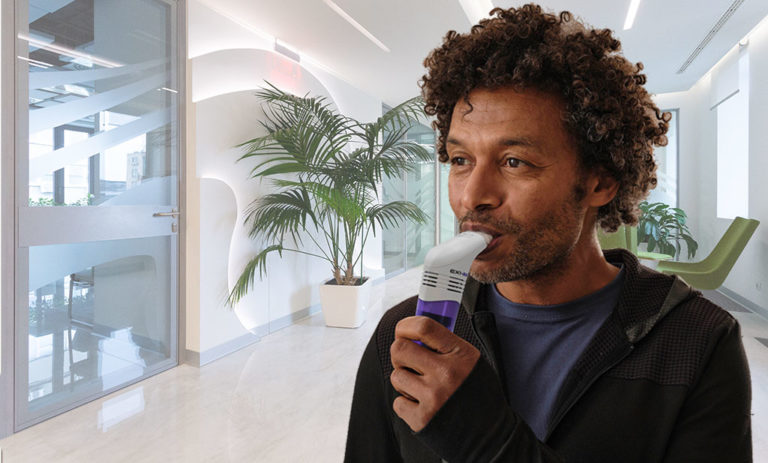
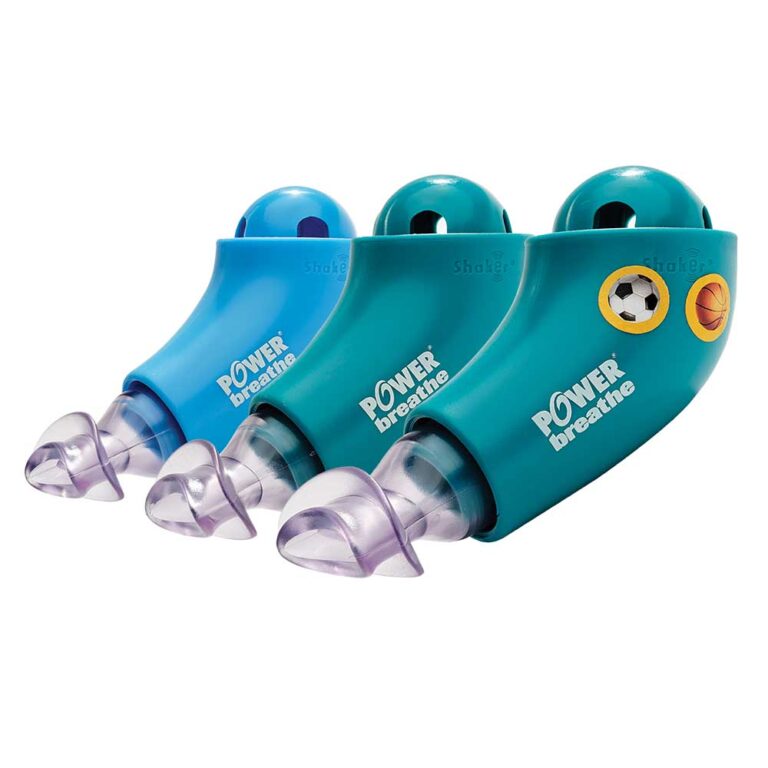
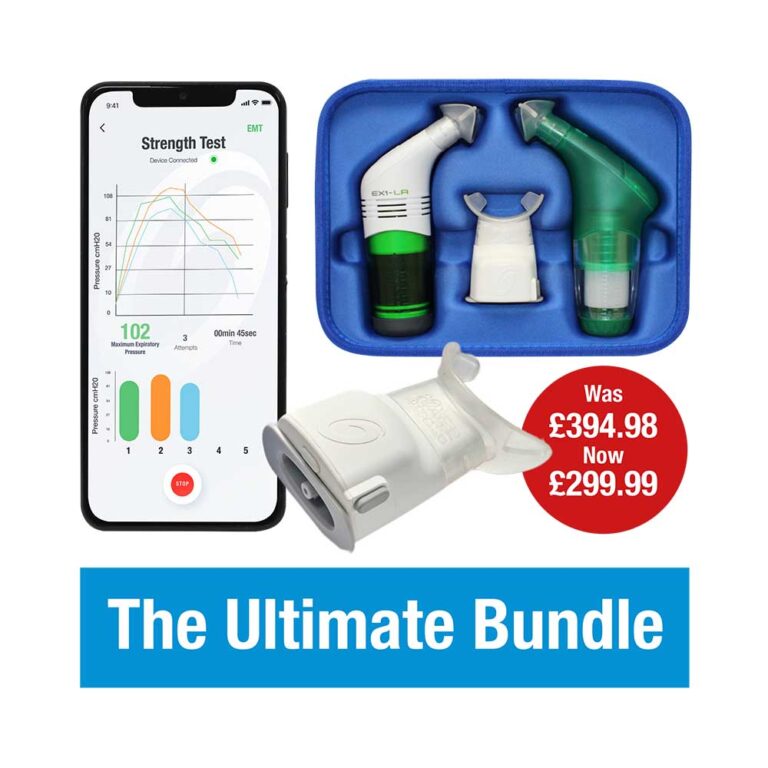
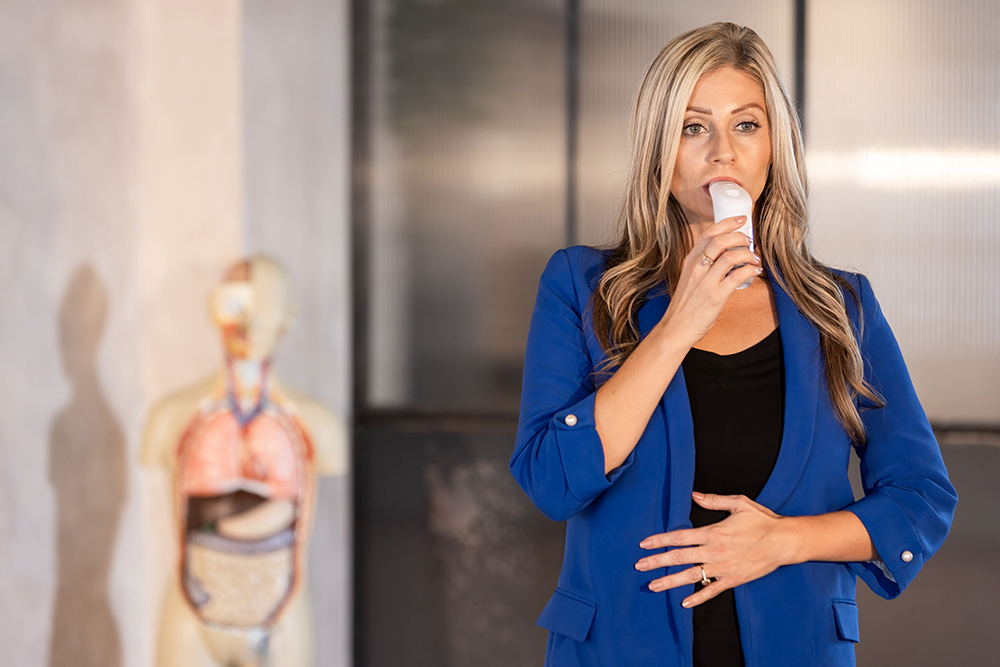
Inspiratory muscle training (IMT/IMST) strengthens and improves the muscles you need for breathing, including the diaphragm. A POWERbreathe IMT device, including the POWERbreathe K5, creates resistance during inhalation to make the diaphragm work harder. This is why we describe Inspiratory Muscle Training with POWERbreathe as “dumbbells for your diaphragm”.
POWERbreathe training is therefore different from a breathing activity for anxiety. When you are trying to settle anxiety in the moment, the priority should be gentle, unforced breathing without resistance.
IMT can instead form part of a separate breathing training routine designed to improve breathing muscle strength and reduce breathing fatigue. The recommended POWERbreathe training protocol involves completing 30 breaths twice a day with a device, with the resistance set to an appropriate level.
POWERbreathe is not a treatment for anxiety. However, regular breathing training may be part of a broader approach to developing greater breathing awareness and strengthening the muscles involved in breathing. This will help you build a better deep-breathing habit so that when you are feeling stressed out or anxious, your body reacts more calmly. POWERbreathe devices provide a natural and drug-free approach.
When Should I Seek Help for Anxiety?
The best breathing techniques for anxiety can help you manage physical symptoms, but they may not address the cause of permanent anxiety. You should speak to your GP if:
- You are struggling to cope with anxiety, fear or panic
- Self-help techniques are not helping
- Anxiety is affecting your work, relationships or everyday activities
- You are regularly experiencing panic attacks
Adults in England can also refer themselves directly to NHS Talking Therapies without first visiting a GP. If you need urgent mental health support but it is not an emergency, call NHS 111 and select the mental health option. Call 999 or go to A&E if you or somebody else is in immediate danger.
A recent POWERbreathe webinar, presented by Olympian Adam Burgess, focused on the fundamentals of breathing, breath control, and his personal experiences of how he incorporates breath work and IMT breathing training, on and off the water.
Frequently Asked Questions About Breathing Activities for Anxiety
How quickly do breathing exercises help with anxiety?
It depends on the individual carrying out the breathing exercises. Some people will feel more settled after a few minutes, while other people may need to practice regularly before the technique feels useful. Breathing exercises will not necessarily remove anxious thoughts, but they may help slow an uncomfortable breathing pattern and make physical symptoms feel more manageable.
Can Breathing Activities for Anxiety Stop Panic Attacks?
Some people find that controlled breathing exercises, such as the 4-7-8 breathing technique, will reduce some of the physical symptoms that occur during a panic attack. But it doesn’t guarantee that the attack will stop. You should seek professional support if you regularly experience panic attacks.
Can POWERbreathe treat anxiety?
POWERbreathe is not an anxiety treatment. Inspiratory muscle training devices by POWERbreathe are designed to strengthen the muscles used to breathe in. IMT should be considered a separate form of structured breathing training rather than a replacement for mental health treatment or calming breathing exercises.
If you are considering using POWERbreathe inspiratory muscle training devices to help improve your overall health, then choosing the right device and resistance level is important. The POWERbreathe team is available to help you during your journey. Contact the team today for more information.