Breathing training works by using a device that applies a load to your in-breath or out-breath. POWERbreathe calls it dumbbells for your diaphragm. This load helps to strengthen the muscles you use to breathe in or out, including the diaphragm and the intercostal muscles. The device makes your inspiratory or expiratory muscles work harder than they normally would when you are breathing regularly.
Using the same concept as dumbbells, regular breathing training will help improve respiratory muscle strength and stamina to help boost performance during sports, performing arts and general wellbeing. POWERbreathe provides world-leading breathing trainers that have been clinically proven to strengthen respiratory muscles.
In this blog, we explain how breathing training works and highlight the data on threshold pressure breathing trainers, the most frequently referenced in clinical research, showcasing the breathing trainer benefits of both inspiratory and expiratory muscle training.
Why Train The Breathing Muscles?
Breathing muscles are skeletal muscles and therefore they can be trained. Training your breathing muscles is hugely beneficial, whether you are fit or unfit, because your breathing muscles influence how well you are able to breathe. Breathing training can even be even more beneficial if you have a medical condition.
Breathing is often controlled subconsciously by the respiratory centre at the base of your brain, but you are also able to control your breathing if you need to. For instance, during singing, playing a musical instrument or when exercising.
It’s important to note that you cannot change the physical size of your lungs. Breathing training does not target the lungs themselves, but it strengthens the muscles that power them. The maximum capacity of your lungs is set by your genetics and is, largely, fixed once you reach adulthood. This is because your lungs are a pair of spongy, air-filled organs. You cannot train organs to become stronger, like you can with skeletal muscles such as your biceps, quadriceps and diaphragm.
Breathing training with drug-free POWERbreathe devices will help you to:
- Strengthen your inspiratory or expiratory breathing muscles including the diaphragm.
- Slow down your heart rate and reduce your work of breathing.
- Reduce your demand for oxygen during exercise.
- Decrease the amount of effort and energy you need to breathe.
Breathing Trainer Device Benefits
Training your breathing muscles with POWERbreathe breathing trainers can provide several benefits, whether you’re looking to improve sports performance or make everyday activities feel easier. By strengthening the muscles responsible for breathing, regular inspiratory muscle training (IMT) can improve breathing strength and stamina while reducing breathing muscle fatigue.
Strengthen Your Diaphragm
The diaphragm is the primary muscle of breathing in, so a stronger diaphragm makes breathing more efficient and less susceptible to breathing muscle fatigue. It works in the exact same way as lifting a weight strengthens your arm muscles. This is why POWERbreathe is often described as a dumbbell for your diaphragm.
Improve Your Energy Levels and Sports Performance
Stronger breathing muscles can help reduce breathing fatigue, allowing you to exercise for longer before becoming breathless. This is why many endurance athletes choose to use POWERbreathe devices. Research has shown that POWERbreathe can improve sports performance by increasing inspiratory muscle strength and stamina.
Research by Okrzymowska et al. (2025) found that middle distance runners using POWERbreathe experience significant improvements in inspiratory muscle strength and several measures associated with physical performance. These findings support benefits of targeted inspiratory muscle training for athletes looking to improve their breathing strength.
Your Inspiratory Muscles
The diaphragm is your main inspiratory muscle.
In addition to:
- Rib cage muscles, external intercostal, internal intercostal, and innermost intercostal muscles.
- Abdominal muscles.
Breathe in, and your diaphragm moves down, pulling in air and expanding your chest cavity.
Your Expiratory Muscles
The muscles in the head and neck are the primary muscles of expiration. These include:
- Tensor/Levator veli palatini
- Pharyngeal muscles
- Muscles of the tongue
- Geniohyoid, Suprahyoid
- Criarytenoid Muscles
During passive expiration, your diaphragm moves up, and your external intercostals also relax and return to their resting position, pushing air out. During forced expiratory breathing, you also utilise the thoracic and abdominal muscles to contract your chest volume.

POWERbreathe Breathing Trainers
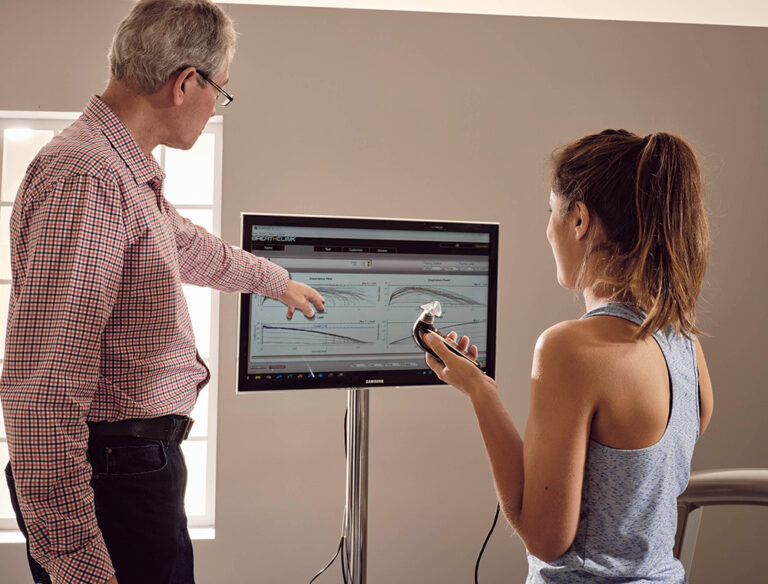
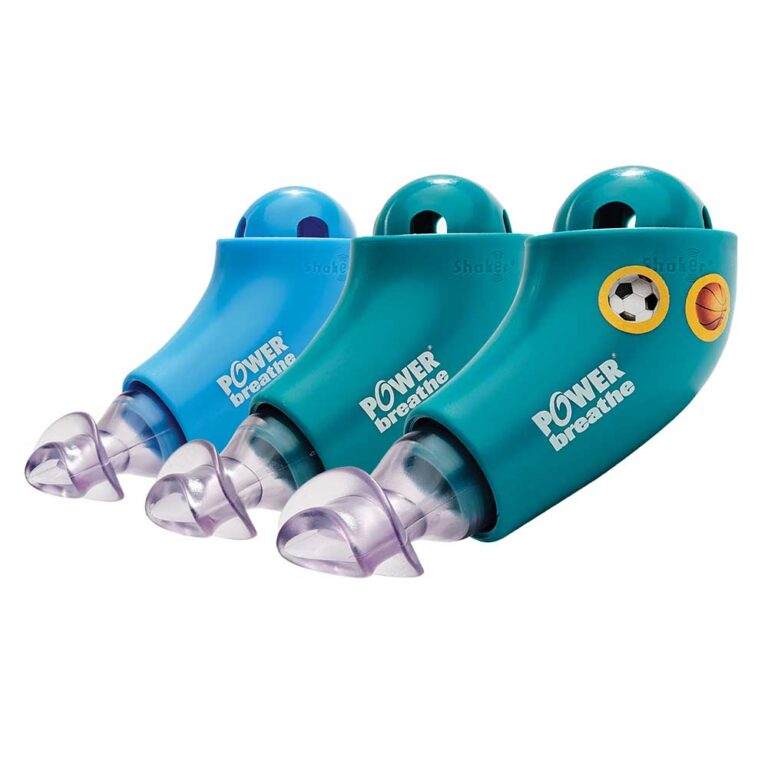
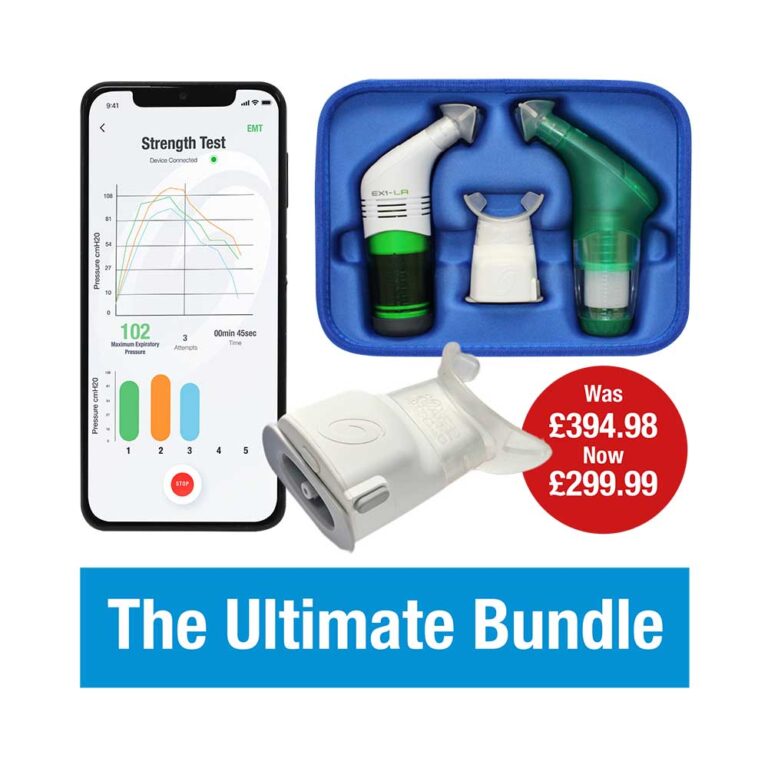
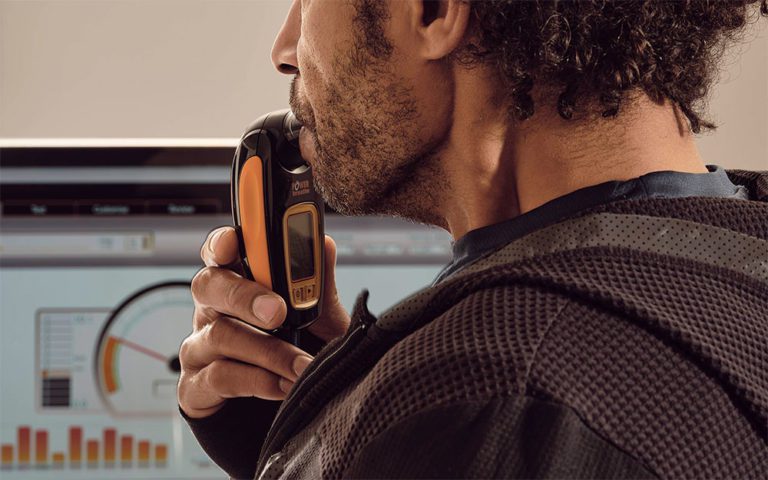
The POWERbreathe range of threshold pressure breathing trainers includes both Inspiratory Muscle Training (IMT/IMST) and Expiratory Muscle Training (EMT/EMST) devices. Our lung trainers are specifically designed to help strengthen your breathing muscles in order to enhance overall respiratory performance. They utilise the same technology frequently referenced in clinical research. Threshold pressure or tapered pressure load devices, apply a load to the inspiratory or expiratory breathing muscles, that is independent of airflow. The user must generate enough pressure to overcome the set threshold, in contrast to flow resistive devices that restrict airflow via different size orifices. With options to suit different experience levels and training objectives, the POWERbreathe breathing trainer range has been designed with everyone in mind. The ActiBreathe® App with Smart Adaptor enables you to perform breathing muscle strength tests, review training plans and get personalised training feedback to take breathing training to the next level. Breathing training can be elevated more with the Breathe-link® Software that comes with the POWERbreathe K4, K5 and medical KH-Series.
Breathing Training for Your Inspiratory Muscles
Inspiratory Muscle Training (IMT) is one element of Respiratory Muscle Training (RMT). It specifically trains your inspiratory muscles by applying a load or pressure as you breathe in through the IMT device. POWERbreathe IMT devices provide this type of training and are scientifically proven to improve breathing strength and stamina and reduce breathing fatigue.
Breathing Training for Your Expiratory Muscles
Expiratory Muscle Strength Training (EMST) is also an element of RMT. It trains your expiratory muscles by applying a load or pressure as you breathe out through the EMST device. POWERbreathe EMT devices provide this challenge to your expiratory muscles, making them work harder to improve expiratory muscle strength, function, and endurance.
Want To Know More?
If you would like to know more about what makes up your respiratory system, you can find it here in How Breathing Works. Our blog, What Happens When You Breathe explains what physically happens when you breathe. We also talk more about breathing and exercise in Breathing Facts. Finally, if you’re unsure which breathing device suits your needs the most, then have a look at our Product Comparison Tables.