Racket Sports
If you don’t breathe properly during a rally, you’ll quickly run out of breath, lose energy, focus and potentially the rally.

During the intense bouts of running that characterise tennis, badminton and squash, such as sprinting to reach a ball, breathing is driven to its highest levels, inducing extreme breathlessness.
Being debilitated by your breathing is very frustrating and can hinder your performance. You cannot afford for your breathing to hold you back as it provides you with the stamina to get you through your game.
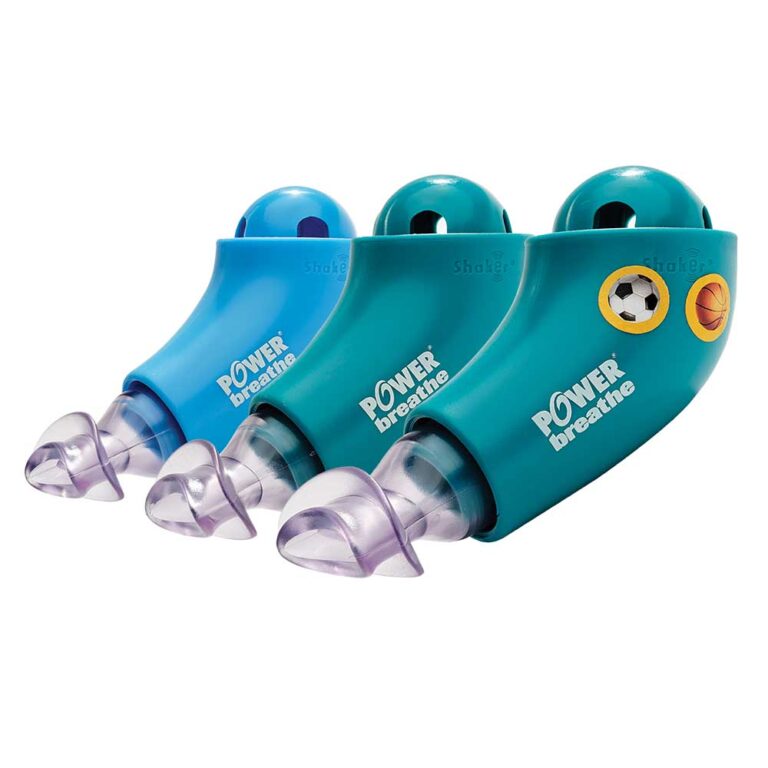
Your breathing muscles also play an additional role in racket sports other than breathing. In fact, you use the breathing muscles in your torso to brace and twist during a racket stroke. And you use your inflated lungs to brace the impact of the ball and racket, controlling the release of air from your lungs and optimising the transmission of force during service. This control is impaired by breathing muscle fatigue but can be improved by inspiratory muscle training with POWERbreathe IMT and expiratory muscle training with POWERbreathe EMT.

Breathing Training Is A Game Changer
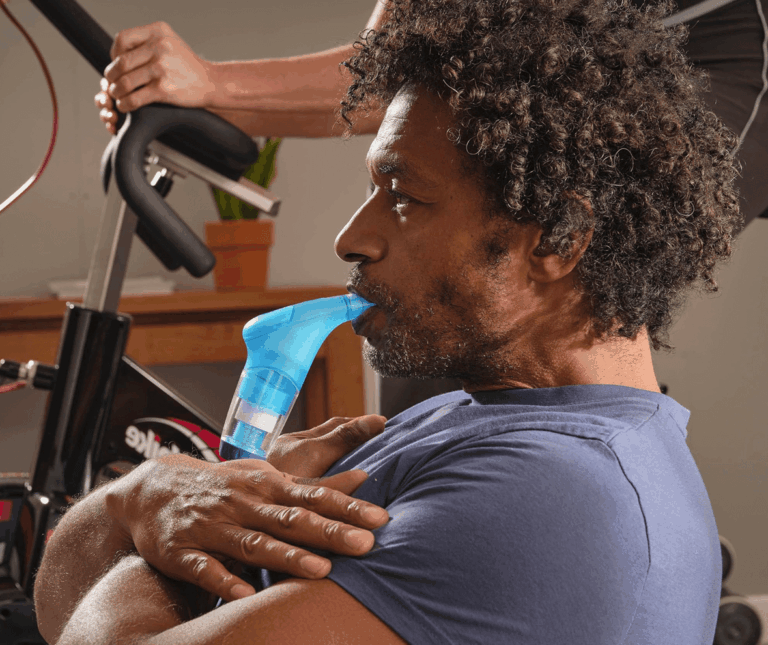
Developed by sports scientists, POWERbreathe Inspiratory Muscle Training (IMT) is scientifically proven to improve your breathing strength and stamina, reducing breathing fatigue.
POWERbreathe IMT and EMT specifically target your breathing muscles using the principles of resistance training to strengthen them, eliminating breathing fatigue. Stronger breathing muscles can help with your postural control and movement too, for instance during a rally.
With stronger breathing muscles you’ll be able to brace the impact of the ball on the racket, and power off the returning shot as you control your exhale. If you haven’t strengthened your breathing muscles then your returning shot will be impaired by breathing muscle fatigue, but this can be improved by strengthening your breathing muscles with POWERbreathe IMT and POWERbreathe EMT.

Improve Strength & Stamina
An inspiratory warm-up using POWERbreathe IMT will also help you warm-up more effectively, as well as, cool-down and recover more quickly. This provides evidence that IMT improves recovery time during high intensity, intermittent exercise in repetitive sprint athletes. This is hugely beneficial in racket sports where you need to recover quickly after sprinting to return a ball.
Furthermore, researchers in Brazil found that breathing against a small inspiratory load straight after exercise reduces lactate by 16%. It also showed that lactate is reduced as soon as exercise stops, finding that just 5-mins after using an inspiratory load, lactate concentration was equivalent to 15-mins of passive recovery.
Select An Activity

Rowing
Breathing During Rowing As a rower, your breathing muscles are not only used for breathing but also for maintaining your posture and for transmitting force during the ‘drive’ phase. This is because your breathing muscles, including your diaphragm, engage in helping to strengthen your trunk and protect your spine. Both breathing and postural control is […]
Read More
Swim, Bike, Run
Breathing Effort In Swimming Competitive swimming is one of the ultimate challenges for breathing, as you have to inhale as much as possible in the shortest time possible, so that you can return your body to the optimal position for generating propulsive force. This creates an enormous strain on your inspiratory muscles and it is […]
Read More
Football
Breathing Effort In Football On average football players are likely to cover around 6.2 – 7.5 miles during the course of a match, at an average intensity of 75-80% of your maximal oxygen uptake (VO2 max.). Throughout the 90 minutes of the game you’ll be cruising for 30-90 seconds and sprinting for 3-5 seconds. Although […]
Read More
Altitude
Breathing Effort At High Altitude At high altitude, the partial pressure is less than at sea-level, meaning oxygen molecules are further away from each other. The higher you go, the more difficult breathing at high altitude becomes. In order to compensate, your lungs work much harder. At sea level, exercise is limited only by the […]
Read More
Wheelchair Sports
Breathing in Wheelchair Sports As a wheelchair user you may experience difficulties with your respiratory system because if your abdominal and chest muscles, including your diaphragm, are affected by injury you’ll find it more difficult to breathe. Your neurological level of injury will determine to what extent your breathing poses to be a problem. If […]
Read More
Rugby
Breathing Effort In Rugby The physical demands of rugby are highly specific to each player’s positional role. Nevertheless, all players require high levels of aerobic fitness, lactate tolerance, strength and power. Although most activity in rugby is sub-maximal, the intermittent sprints, tackling, scrums, rucks and mauls are supra-maximal, taking you above 100% of your maximum […]
Read More
Fitness
Breathe Your Way To Faster Fitness Breathlessness is a common feature of exercise and although aerobic activity does provide training benefits to your breathing muscles, it’s not sufficient to elicit their full potential. Your breathing muscles never really get trained enough to cope with the ‘heavy breathing’ that results from high-intensity exercise, and for this […]
Read MoreRelevant Articles

Breathing Exercises for Athletes Using POWERbreathe IMT & EMT
Improving breathing strength and stamina can really make a difference in athletic performance, especially in sports like those seen at the Olympics. And using drug-free POWERbreathe Inspiratory Muscle Training (IMT) and Expiratory Muscle Training (EMT) devices helps athletes get the most from their respiratory muscles. This is because breathing muscle training also reduces breathing fatigue, […]

How Training The Inspiratory Muscles Can Improve Tennis Performance
POWERbreathe is a useful device to stimulate sports performance and increase pulmonary function in various sporting fields
5 weeks of POWERbreathe K3 IMT attenuates the respiratory metaboreflex
Effects of expiratory muscle work on muscle sympathetic nerve activity
Expiratory muscle fatigue impaired subsequent exercise tolerance primarily through increased severity of limb locomotor muscle fatigue and a heightened perception of leg discomfort
Expiratory muscle training increases expiratory muscle strength and reduces the sensation of respiratory effort during exercise