Chronic obstructive pulmonary disease (COPD) is the name for a group of lung conditions that cause breathing difficulties. COPD is a chronic, progressive lung condition that currently has no cure. However, treatment can help slow down the progression of COPD and relieve symptoms.
Many patients practise breathing exercises for COPD because the condition can make everyday tasks such as walking upstairs and carrying items feel tiring. In certain situations, sufferers have to be mindful of weather conditions and closely monitor the environment for dust, smoke or strong-smelling products.
This article provides a practical, evidence-based guide to breathing exercises for people living with COPD. It explains how POWERbreathe’s inspiratory muscle training devices can be effective in supporting more controlled and efficient COPD breathing.
What are the Symptoms of COPD?
The main symptoms of COPD include shortness of breath, a persistent chesty cough, frequent chest infections and persistent wheezing.
If left unaddressed, these symptoms will get worse over time and people living with COPD will find it increasingly difficult to perform physical activities.
Recommended Breathing Exercises for COPD
It is therefore understandable that patients with COPD want to know how to improve lung function. COPD is a progressive condition that cannot be cured, but improving how your breathing muscles work can make a meaningful difference to daily life.
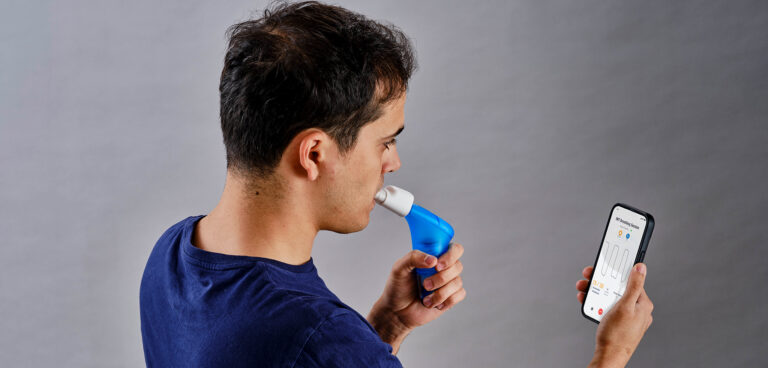
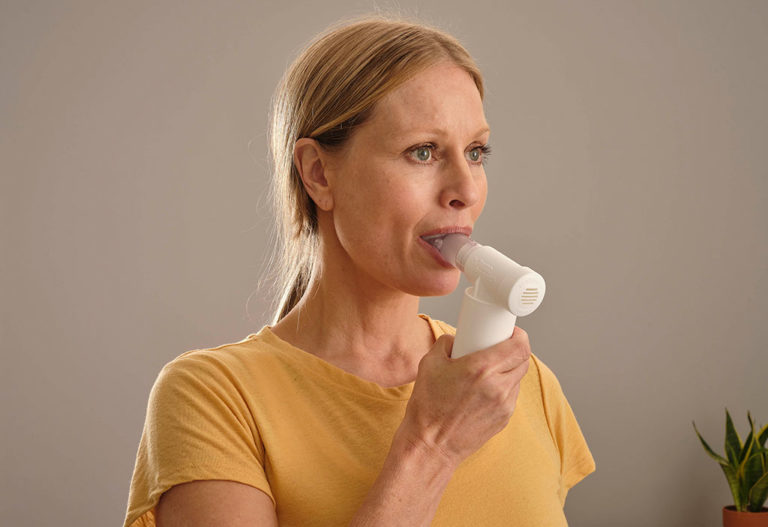
Breathing exercises, combined with inspiratory muscle training with POWERbreathe, can help increase respiratory muscle strength, which may reduce breathlessness during everyday activities. When your breathing becomes more efficient, the body can use oxygen more effectively to reduce fatigue and improve endurance. Structured exercises and training focus on the respiratory muscles themselves. The following breathing exercises for COPD can help patients.
Pursed Lip Breathing
The pursed lip breathing exercise can help control shortness of breath. This exercise should help slow down the pace of breathing. It’s very simple, and it’s probably something most people have tried or done without really actively thinking they are pursed-lip breathing.
People use this breathing exercise for COPD when they experience shortness of breath. To start the exercise, breathe in (inhale) slowly through your nose for two seconds. Keep your mouth closed during the inhale. Then, breathe out (exhale) through pursed lips, slowly for four seconds.
After completing this breathing exercise, you should notice you have more control over your breathing speed. This should make each breath more effective. You can practice this technique as many times as you want during the day.
Diaphragmatic Breathing
Diaphragmatic breathing is also known as belly breathing. This breathing exercise for COPD focuses on the diaphragm muscle and helps promote relaxation. If this exercise is carried out correctly, it can enable you to maximise your lung efficiency.
You may find it challenging at first, so it might take a bit of practice to get it right. When you’re first trying this breathing exercise, you may find it easier to lie on your back. Make sure to lie on a flat surface. Bend your knees and make sure your head is supported.
You will need to use both hands. Place one hand on your upper chest, and the other on your abdomen. This allows you to focus on your diaphragm as you breathe. Breathe in slowly through your nose and ensure that your stomach moves out. You should notice your hand on your abdomen move up. The hand on your chest should remain in the same position. If this isn’t the case, try again and focus on making the lower hand move upwards when breathing in.
When breathing out through pursed lips, your stomach will move in, causing the hand on your abdomen to lower. The upper hand should remain still again. You may notice that this breathing exercise makes you feel tired.
Once you have successfully managed to complete this breathing exercise lying down, you may want to try it sitting in a chair. We recommend that you practice this breathing exercise to help with COPD, breathing three times a day, for about 5 to 10 minutes each time.
Pacing Techniques to Manage Breathing and COPD
Pacing can help you manage your breathing if you have been diagnosed with COPD. It is designed to keep your energy levels consistent throughout the day. When planning your pacing technique ahead of time, it may seem like it will take longer to complete tasks. However, it ensures you can complete more tasks across the course of the day. You may find it helpful to look at the week as a whole to manage your COPD symptoms across the week.
Consider the activities you plan to undertake during the day (or week), and plan to spread them out. You may find it easier if you are using a diary or a timetable. This will give you enough time to take short breaks in-between tasks to stay in control of your breathing. When completing tasks, you should pay attention to your body and how it feels. Slow down if needed.
You may also want to consider how you are going to complete the task. For example, you could choose to sit down when ironing to conserve energy.
Gentle Physical Exercise
When thinking about how to improve lung function with COPD, it’s important to continue gentle physical activity where possible. This needs to be structured and planned in advance, so you’re not overworking and causing yourself to get out of breath regularly.
Gentle exercise, such as walking, can improve endurance and will support COPD breathing when performed consistently and safely.
Inspiratory Muscle Training for COPD
Research shows that inspiratory muscle training (IMT) with POWERbreathe increases exercise capacity, reduces shortness of breath, and improves quality of life for people living with COPD.
During one research study, patients used a POWERbreathe IMT device daily in two sessions of 15 minutes each, six times a week across a 12-month period. After three months of training, there was a significant increase in Pimax for the training group. The control group did not record the same increase. This trend continued over the next nine months. The research concluded:
“This study shows that in patients with significant COPD, long-term IMT results in an increase in the inspiratory muscle strength. Our results show that the number of days spent in the hospital by the training group was 30% less than the number of days spent by the control group. Our study also provides evidence that long-term IMT can have benefits in terms of health status in patients with significant COPD, and to decrease the use of health services that might translate to economic benefits as well.”
Marinella Beckerman et al (2005)
How to Improve Lung Function with COPD using a POWERbreathe IMT Device
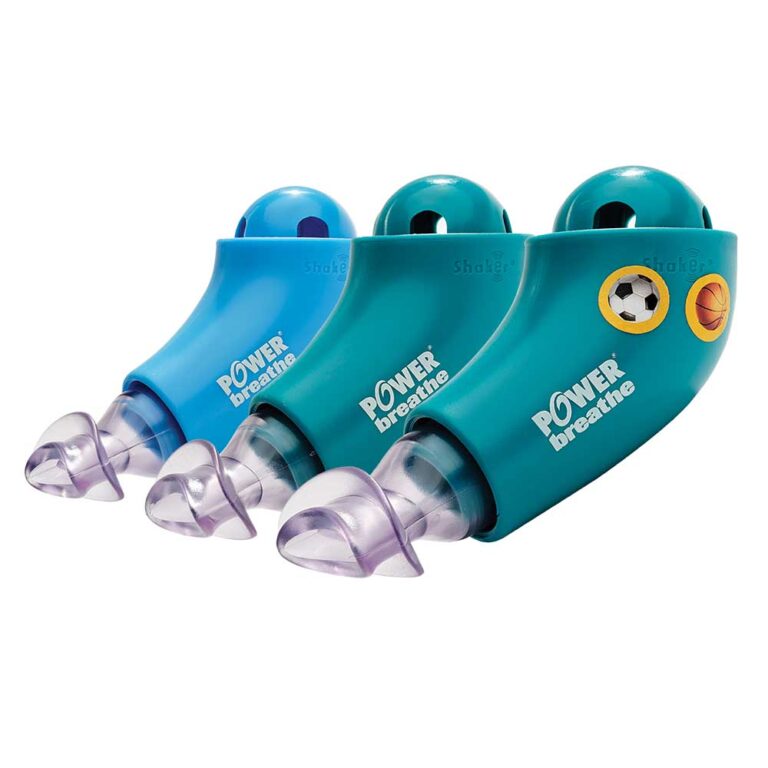
All devices in the IMT range can help support patients with COPD. The POWERbreathe Medic and POWERbreathe Medic Plus have both been clinically proven to alleviate breathlessness. You should speak to your GP or healthcare professional to find out more information about these devices.
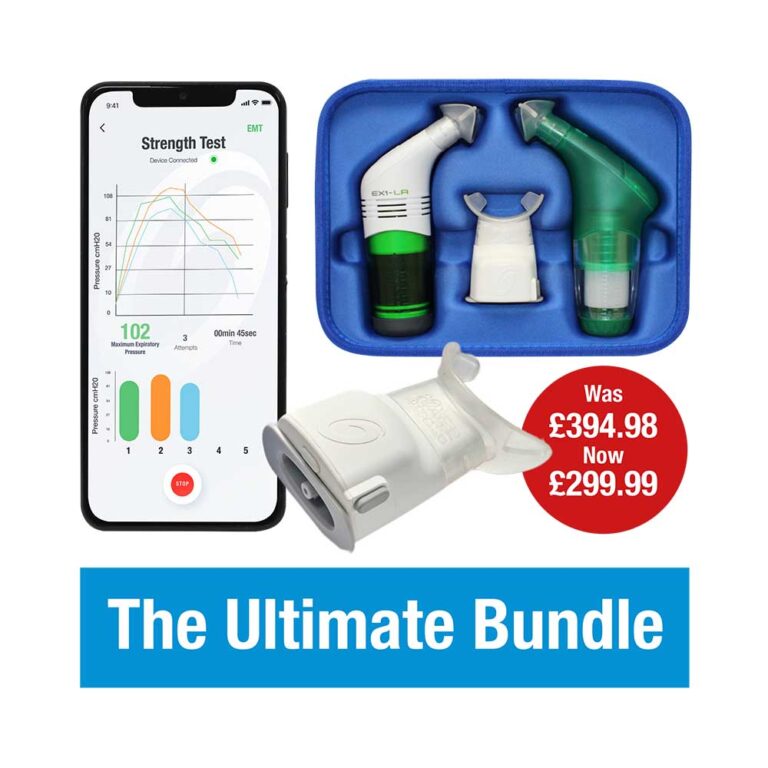
The POWERbreathe K-Series uses cutting-edge technology to enhance your inspiratory muscle training for COPD. It features an automatic setup, real-time guidance and instant feedback. Using a device in the K-series makes it easier to train and breathe more strongly. If you are considering using POWERbreathe inspiratory muscle training devices to help manage COPD breathing, then choosing the right device and resistance level is important. The POWERbreathe team is available to help you during your journey. Whether you’re suffering from COPD or just want to improve your lung function, getting the right support can help you feel more confident. Contact the team today for more information.