How the POWERbreathe EMT device works
POWERbreathe has a range of expiratory muscle training (EMT) devices designed to improve cough, swallow and vocal strength, stability, endurance and power whilst improving your quality of life. Our EMT devices are available in different resistance levels to suit individual needs. Read our guide to learn how POWERbreathe EMT works.
Explore POWERbreathe EMT Devices
What is an EMT Device?
An EMT device is designed to strengthen the expiratory muscles – the muscles you use to breathe out. Abdominal,internal intercostal and laryngeal muscles are the main muscles that help push air out of your lungs during forced expiration. EMT breathing devices, such as the POWERbreathe EX1, work by applying resistance to your out-breath, making the expiratory muscles work harder than they would during normal breathing.
Think of it like weight lifting for your expiratory muscles. After consistent training, stronger expiratory muscles can support activities that require forceful or controlled breathing out, including coughing, speaking, exercise, singing and playing wind instruments.
POWERbreathe EMT in Action
POWERbreathe EMT devices have been used in clinical and scientific research to investigate the benefits of strengthening the muscles used during forced expiration.
In 2026, a randomised controlled trial involving 30 children aged 8–18 with clinically stable asthma used the POWERbreathe EX1 Medic for eight weeks. Participants in the EMT group completed 25 breaths once per day at 30% of their maximal expiratory pressure (MEP), with the resistance adjusted weekly as their strength improved.
Compared with the sham-training group, those completing EMT alongside chest physiotherapy showed greater improvements in measures including expiratory muscle strength, peak expiratory flow, peak cough flow, functional capacity and asthma control.
“The addition of 8 weeks of EMT resulted in greater improvements in pulmonary function, respiratory muscle strength, cough effectiveness, functional capacity, and asthma control compared with sham training.”
Kaya et al. (2026)
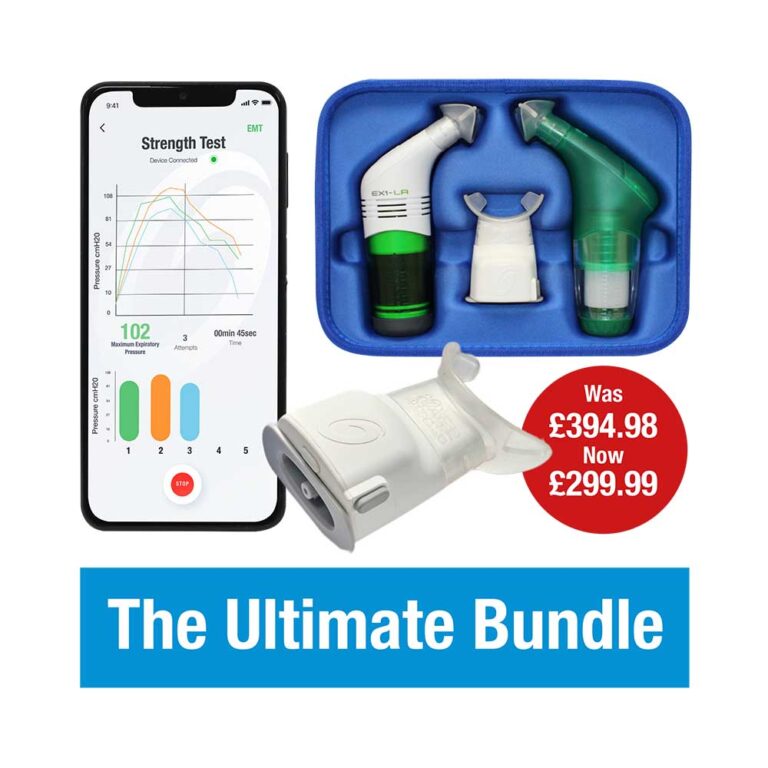
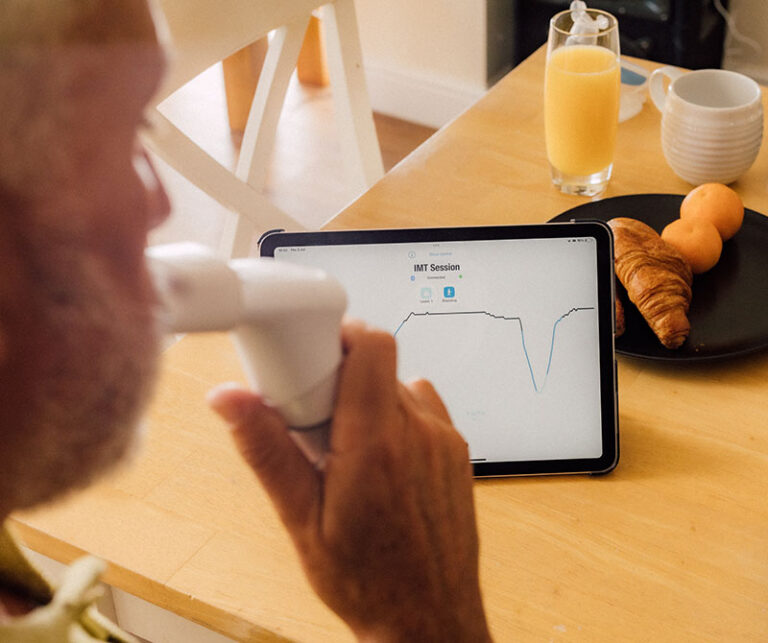
POWERbreathe EX1 users can introduce a more data-led approach to their own training by adding the POWERbreathe Smart Adaptor and using the ActiBreathe® App. The Smart Adaptor can measure expiratory breathing strength, recommend an appropriate training resistance and provide real-time feedback to help you monitor your progress.
POWERbreathe EMT Breathing Devices FAQs
The POWERbreathe EMT devices use expiratory ‘pressure threshold’ loading to exercise your expiratory muscles, in a similar way to weightlifting.
The calibrated spring in the device provides the breathing load; this load is like the weight being lifted. As you increase the load, it will become harder to exhale against the resistance and open the valve to enable expiration through the device.
When exhalation feels easy at the resistance set, adjust the training load to increase the resistance. Just as you would choose to lift a heavier weight as you get stronger over time, the higher resistance should be more challenging.
- Turn the dial at the bottom of the device to level 0.
- Take an initial deep breath in, then place the EMT breathing device in your mouth and maintain a tight lip seal around the mouthpiece.
- Forcefully exhale through the device until the valve opens and you can hear the air rushing out.
- If air went through easily, turn the dial to increase the resistance. Repeat the process again until it becomes challenging to force the air through – this will be the level of training you should start with.

Find out how to perform the correct breathing technique for POWERbreathe EMT in our video below.
Once you have identified the best starting resistance for your ability, begin the training protocol, which is as follows:
- Take an initial deep breath in, then place the EMT device in your mouth and maintain a tight lip seal around the mouthpiece.
- Forcefully exhale through the device until the valve opens and you can hear the air rushing out.
- Repeat this 5 times. After each set, rest for 1 minute before attempting the next set.
- Do this set of 5 exhalations, 5 times per day, and perform this training 5 days a week.
- Note: during training, you do not need to remove the device from your mouth after every exhale.
The typical training protocol for expiratory muscle training is 5 x 5 x 5 (5 x exhales, 5 times a day, for 5 days a week).
When the load you have set starts to feel easy to manage, you need to start increasing it by turning up the dial on the handle. It is recommended that you start with a quarter-turn of the dial to increase the load by the smallest amount.
EMT breathing devices can be used by anyone who uses forced expiratory breathing. They are ideal for people who need to empty air from their lungs more than normal.
People with medical conditions
POWERbreathe EMT devices can improve the symptoms of people with the following conditions:
- Dysphagia (difficulty swallowing)
- Cervical or spine injury
- Coughs, like chronic bronchitis
- Stroke rehabilitation
- Motor Neuron Disease
- After surgery
By improving your cough strength, it will be easier to clear food and drink from the airways. The movement and strength of the swallowing muscles help clear food and drink through the throat.
Singers
If you play a wind instrument or sing, EMT can improve your performance. As you can empty more air from your lungs, you can play for longer and with more ease.
Sportspeople
Stronger expiratory muscles are also beneficial for sportspeople wishing to improve their sports performance because expiratory muscle fatigue impairs performance.
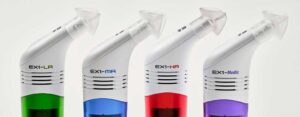
Our comparison chart breaks down the different features of each EMT device. The EX1 EMT light resistance is ideal for beginners. The EX1 EMT Medic is recommended for use with patients with compromised breathing. The medium resistance model is suitable for people who have experience with breathing training, and so can expel more air. Finally, the heaviest resistance device is for people with large lung volumes and who have reached the highest level on the POWERbreathe EX1-MR device.