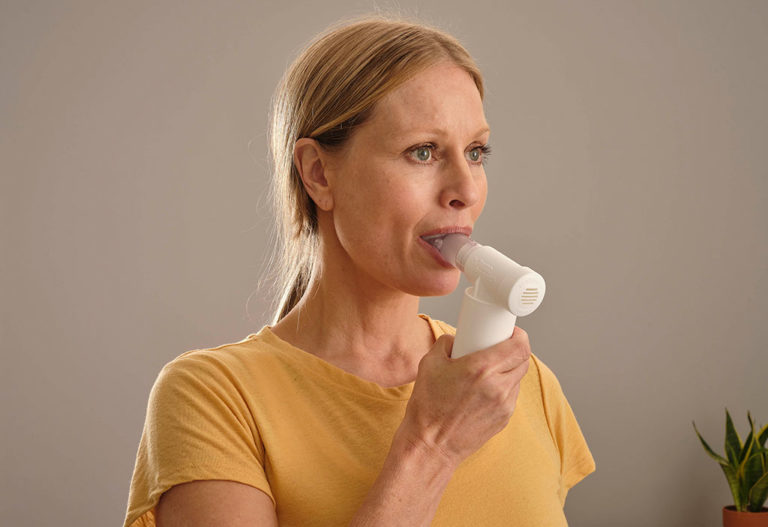
Pelvic floor dysfunction is often spoken about in relation to bladder control, pregnancy, childbirth and menopause. But one area that is often overlooked is breathing. There is emerging evidence to suggest that inspiratory muscle training may have a positive effect on pelvic floor muscle function.
When it comes to breathing, the diaphragm is the star of the show. It sits underneath the lungs and contracts when you breathe in. This allows the lungs to expand and reduces intra-thoracic pressure, allowing air to move in. The diaphragm relaxes when you breathe out. The pelvic floor muscles and the diaphragm may seem unrelated, but they are connected during breathing.
Understanding what pelvic floor dysfunction is, can help you recognise what’s going on and enable you to find ways in which to improve the associated symptoms. If you experience consistent urinary leakage, or difficulty breathing in pregnancy, then you should speak to your GP or midwife for advice.
What is Pelvic Floor Dysfunction?
Pelvic floor dysfunction happens when the muscles surrounding the pelvic floor are too weak or poorly coordinated. This can cause problems for the bladder, bowel, or uterus. Common signs of pelvic floor dysfunction include:
- Leaking urine when coughing, laughing, sneezing or exercise
- Changes to bladder sensation and/or bladder control. This may result in reduced awareness of needing to go to the toilet.
- More frequent visits to the bathroom
- Bowel control issues
- Abdominal pain
What is the Relationship Between Breathing and the Pelvic Floor Muscles?
Breathing and the pelvic floor are closely linked because of the way the diaphragm and the muscles surrounding the pelvic floor move together. The diaphragm sits underneath the lungs and moves down when you breathe in. During relaxed breathing, the diaphragm, abdominal muscles and pelvic floor work together in synergy resulting in pressure changes inside the body.
The best way to think about it is to imagine a cylinder. Your diaphragm is at the top and the pelvic muscles form the base of the cylinder. The abdominal muscles form the sides of the cylinder.
When inhaling, there will be an increase in intra-abdominal pressure. This results in more force being exerted on the pelvic floor muscles. When the body is healthy, those muscles will be strong and supportive. However, sometimes, those muscles may struggle to manage the load, which can lead to pelvic floor dysfunction.
If support from those muscles is not present, pressure is lost through the pelvic floor, which can trigger some of the symptoms described above. This includes stress urinary incontinence (SUI). In other words, if one part of the cylinder breaks down, it could lead to problems elsewhere.
A 2022 study by Abidi et al., looked at the impact of urinary incontinence on physical function and respiratory muscle strength in incontinent women.
“The study showed that incontinent women have lower RMS (Respiratory Muscle Strength), mainly within the expiratory muscles, and deteriorated PF (pelvic floor) compared to healthy individuals. Furthermore, the patients’ urinary and PF were moderately to significantly affected by expiratory muscle strength. Since SUI may decrease PF and RMS, it is highly recommended to encourage women to train their PFM (pelvic floor muscles). PFM training could effectively improve RMS and AMS in patients with SUI.”
Inspiratory Muscle Training to Improve Pelvic Floor Muscle Function
A 2024 study by Abidi et al., demonstrated that inspiratory muscle training can significantly reduce the severity of SUI.
In this study, 27 incontinent women were assigned to either inspiratory muscle training or placebo inspiratory muscle training. The trial was completed over 12 weeks, with the group performing 5 sets of 5 repetitions, 3 times a week.
The study concluded that the inspiratory muscle training programme significantly reduced the severity of stress urinary incontinence, improved pelvic floor muscle function, enhanced physical function and increased respiratory muscle strength in women with stress urinary incontinence.
For further information on respiratory muscle training for pelvic floor dysfunction, view our recent webinar by Jessica De Mars.
Inspiratory Muscle Training with POWERbreathe
Inspiratory Muscle Training with POWERbreathe is like dumbbells for your lungs. It involves breathing against resistance using a breathing trainer, like the POWERbreathe Plus. The easy-to-use device features a precisely calibrated spring, which weighs down a valve; when you breathe in, enough force must be generated to lift the spring and open the valve. Over time, breathing training with a POWERbreathe device will strengthen the respiratory muscles. It is clinically proven and POWERbreathe has been used in hundreds of research studies around the world.
Connecting a POWERbreathe Smart Adaptor to your POWERbreathe Plus elevates your IMT training. This innovative system delivers personalised breathing strength testing, precise guidance, detailed progress tracking and powerful analytics, via the ActiBreathe® App on your phone or tablet, so you can move beyond the guesswork and achieve peak performance.
The POWERbreathe K-Series, which uses cutting-edge tapered loading technology, takes inspiratory muscle training to the next level. The K-Series inspiratory muscle trainers adapt to the strength of your respiratory muscles, allowing you to train more efficiently, for longer. Featuring automatic set up and metrics including load, power, flow (PIF) and S-Index®, the POWERbreathe K-Series make it even easier to train your breathing muscles. (See the K-Series Comparison Table for more information)
Using any POWERbreathe inspiratory muscle trainer for 30 breaths, twice a day may help reduce symptoms of pelvic floor dysfunction. And whilst research is ongoing in this area, early studies have found that inspiratory muscle training can have a positive effect on pelvic floor muscle function and symptoms of stress urinary incontinence. This is likely because the breathing muscles, abdominal muscles and pelvic floor work together as part of one system.
Pelvic Floor Dysfunction and Pregnancy
Many women become aware of their pelvic floor when pregnant. Some women may experience pelvic floor symptoms during pregnancy. Others may notice symptoms after giving birth. These symptoms can include:
- Leaking
- Pelvic heaviness
- Reduced core control
- Discomfort when exercising
Breathing can also feel different during pregnancy. Some women will notice they become breathless more easily. This may be heightened in the later stages of pregnancy. Some may experience shortness of breath before a physical change in the size of the bump.
Why You May Experience Difficulty Breathing in Pregnancy
Experiencing difficulty breathing during pregnancy is quite common. There can be several reasons for this, but generally speaking, the amount of oxygen in your body needs to increase. Hormonal changes may also affect the breathing pattern. As the baby grows, it can reduce the amount of space your diaphragm has to move comfortably.
The NHS advises urgent help for severe difficulty breathing, chest tightness or heaviness, pain spreading to the arms, back, neck or jaw, blue or grey skin or lips, or sudden confusion. If you are pregnant and unsure whether your symptoms are normal, contact your midwife, GP or NHS 111 for advice.
Home Remedies for Shortness of Breath During Pregnancy
If your breathlessness is mild, there are some techniques to try to make breathing feel more comfortable. These home remedies for shortness of breath during pregnancy are not a replacement for medical care.
- Changing your posture: Posture can affect how the diaphragm performs. Try to sit upright, without slumping. Keep your shoulders relaxed. When possible, use pillows to support yourself in bed.
- Introducing pacing: Don’t do everything at once. Plan ahead, so you’re not rushing around. Break tasks down into smaller chunks, pause when needed, and plan rest breaks during the day.
- Avoid breath-holding: Many people hold their breath without realising. This usually happens when doing everyday activities. Try exhaling gently during effort. For example, breathe out as you stand up, lift a bag or push open a heavy door. This may help reduce downward pressure on the pelvic floor.
- Gentle breathing exercises: Sit comfortably with your back supported and place one hand on your lower ribs. Breathe in gently through your nose, feel your ribs expand slightly outwards, then breathe out slowly and allow your body to relax. Repeat for a few breaths without forcing it. The aim is not to take huge breaths, but to encourage calm movement through the ribs and diaphragm.
Can Inspiratory Muscle Training Improve Difficulty Breathing in Pregnancy?
Inspiratory muscle training with POWERbreathe can help increase respiratory muscle strength. Research has shown that IMT can benefit both healthy individuals and people experiencing breathing difficulties. Many hundreds of studies utilising POWERbreathe have found that IMT not only improves respiratory muscle strength but it can also improve the sensation of shortness of breath. Expiratory muscle training is not safe to perform during pregnancy. If you are considering commencing IMT, it is best to speak with a healthcare professional beforehand. If you are considering using POWERbreathe inspiratory muscle training devices to help improve your overall health, then choosing the right device and resistance level is important. The POWERbreathe team is available to help you during your journey. Contact the team today for more information.