Types of Load used in Breathing Trainers
Features |
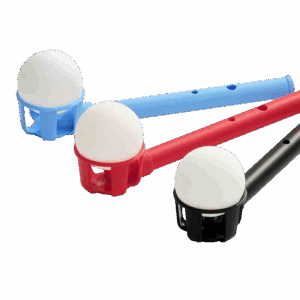
Flow - Many Competitor Models |
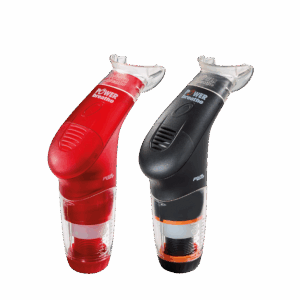
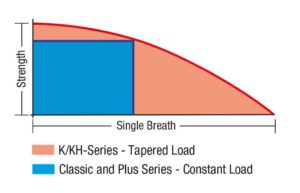
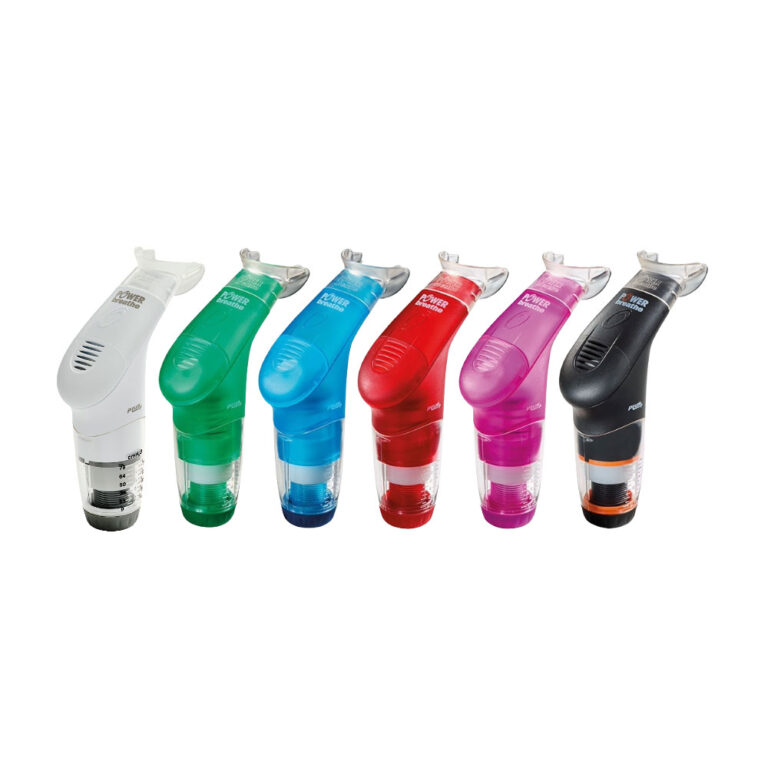
Constant Load - Both the POWERbreathe Classic and Plus use Constant Load |
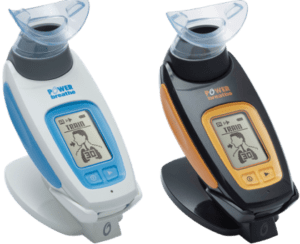
Tapered Load - The POWERbreathe K-Series uses Tapered Load technology |
|---|---|---|---|
Summary |
Simple devices that makes breathing harder by limiting the amount / speed of airflow. | Effectively strengthen lung muscles, using a fixed resistance that can be increased as the breathing muscles get stronger. | Offers a wealth of benefits over Flow & Constant Load Devices. Automatically sets the most effective training level and trains each breath for longer. |
Resistance & Set Up - Type of Resistance
|
Flow devices restrict air speed (flow). Similar to breathing through a straw partially covered by your finger. | Using 'Pressure Threshold' technology, your breath must generate enough force to open (or lift) a valve and keep it open. | Using 'Pressure Threshold' technology, a pressure sensor detects when your breath generates enough force to open the electronic valve, which precisely adjusts airflow throughout each breath. |
Benefits of this resistance type |
A basic, simple & sometime cheaper device. | More accurate, reliable, controlled and measurable compared to flow devices. | More accurate, reliable, controlled and measurable compared to flow devices. |
How is the resistance generated? |
A hole is made bigger or smaller allowing more or less air through. | Uses a Light, Medium or Heavy spring to weigh down a valve that restricts the flow of air. | An electronic rotary valve automatically restricts the flow of air. |
Resistance Setting (measured in cmH20 - think of this as the weight your lungs can lift) |
User sets resistance level. A dial covers and uncovers a hole allowing selection of different flow rates. | User sets resistance level. A dial increases and decreases the 'weight' of the spring on the valve. Each breath must generate enough force to open or lift a valve and keep it open. | User can set the resistance manually or let the in-built Pressure Sensor test how strong your lung muscles are, which then sets an appropriate resistance automatically. |
How accurate are the resistance measurements? |
Not very accurate. How fast you breathe affects the resistance. Breathing slowly is easier (and not as effective) than breathing quickly through the same sized hole. | Accurate. The device can be set to a specified level, that relates to the required pressure you need to generate, to lift the valve. This is measured in cmH2O. See the Load Comparison Chart for more details. | The most accurate. The electronic Pressure Sensor is calibrated and directly relates to a scientifically measured pressure (cmH2O). Can also display other results and measurements. |
Tapered resistance during breath? (For optimum training) |
No. Flow level is the same throughout each breath. | No. Resistance level is the same throughout each breath. | Yes. Resistance level is dynamic and reduces throughout each breathe. |
Breath Type |
Shorter breath lengths due to the muscles naturally weakening and not being able to keep breathing through the restricted hole. | Shorter breath lengths due to the muscles naturally weakening and not being able to keep the valve open. | Shorter breath lengths due to the muscles naturally weakening and not being able to keep the valve open. |
Comfort during a single breath |
Can feel strenuous and uncomfortable as it restricts the flow of air. User must also control the breath to maintain resistance and effectiveness. | Can feel strenuous to use at higher resistances. | Comfortable to use at higher resistances as the tapering lowers resistance to match your naturally declining muscle strength at the end of each breath. |
Breathing Range |
Limited as lung muscles naturally weaken and flow becomes too difficult. | Limited as lung muscles natuarally weaken and resistance becomes too difficult. | Effective across the full range of a breath. |
Training focus |
Basic endurance & control. Strength when training is performed correctly. | Strength, endurance and control. | Strength, endurance and control. |
Training Range during one breath |
Less training per breath. Difficult to make sure the key breathing muscles are being trained. | Less training per breath. Engages and trains most key breathing muscles. | Maximises training per breath by up to 50%. Engages and trains the full range of breathing muscles. |
Effectiveness |
Standard strength training with limitations. | More effective for strength training and basic breathing pattern training. | Most effective and user friendly for strength training and improving breathing patterns issues. |
Additional Benefits |
Standard benefits of breathing training include improved strength, resiliance to breathing conditions, improved surgical outcomes, increase tolerance to general exercise, improvement in sports performance. The extent of the improvement directly relates to the effectiveness of the device used. | Standard benefits of breathing training include improved strength, resiliance to breathing conditions, improved surgical outcomes, increase tolerance to general exercise, improvement in sports performance. The extent of the improvement directly relates to the effectiveness of the device used. | In addition to standard benefits, training to the end of each breath helps access and engage more of your lung capacity meaning you can absorb more oxygen with each breath and breathing efficiency is improved. |
Evidence Shows |
Unclear. Very few independent scientific studies are done using a Flow device. Often, generic Muscle Training Research is referenced. | Effective and well documented. Good for improving breathing muscle strength. Used in many studies, often as the model the patient uses. | Clinically proven to deliver faster results for breathing muscle strength, volume and flow. Used in many studies. |
The Healthcare Professional and Researchers choice |
Over 200 independent studies and research use a POWERbreathe Constant or Tapered Load device, including the World Health Organisation. They are the Gold Standard and give more accurate and controllable settings for comparison as well as superior data capture options. | Over 200 independent studies and research use a POWERbreathe Constant or Tapered Load device, including the World Health Organisation. They are the Gold Standard and give more accurate and controllable settings for comparison as well as superior data capture options. | |
| Buy | Buy |

Tapered Load compared to Constant Load