You have no items in your shopping cart.
POWERbreathe Kinetic

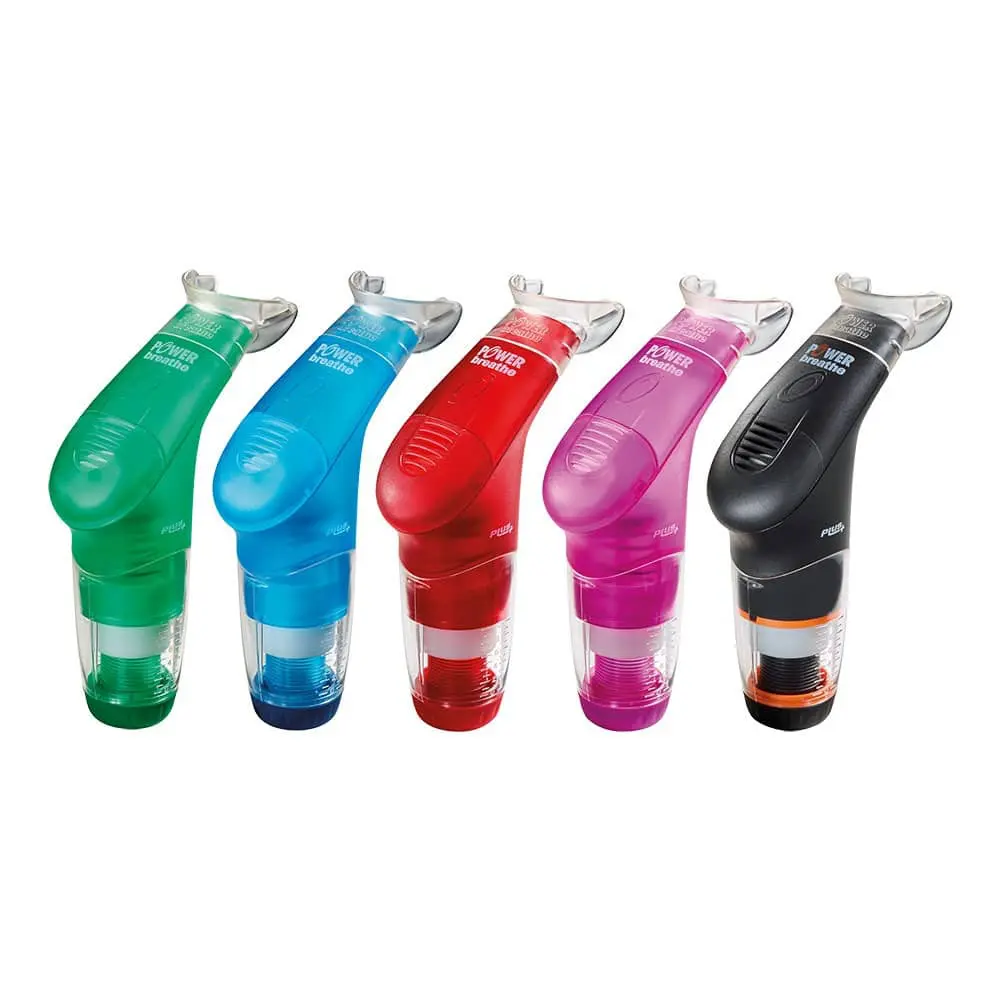
The POWERbreathe Kinetic series is the 3rd generation of POWERbreathe Inspiratory Muscle Training (breathing training) products to have been developed. POWERbreathe Kinetic is also the world’s first intelligent digital breathing trainer.SM
| 3 Item(s) | Show per page |
| View as: Grid List |
Sort by
|
-
POWERbreathe Kinetic K1
Excl. Tax: £ 212.76 Incl. Tax: £ 249.99 -
POWERbreathe Kinetic K2
Excl. Tax: £ 234.03 Incl. Tax: £ 274.99 -
POWERbreathe Kinetic K3
Excl. Tax: £ 255.31 Incl. Tax: £ 299.99
| 3 Item(s) | Show per page |
| View as: Grid List |
Sort by
|
The very latest research and technology have led to the revolutionary POWERbreathe Kinetic series and the development of an electronically controlled, rapid-response valve to create a resistance to inhalation. The POWERbreathe Kinetic training resistance is specifically designed to match the dynamic changes in breathing muscle strength throughout the breath and then automatically adapt to increases in inspiratory muscle strength at the start of each training session.
Further technological advances have enabled training measurement results to be displayed on an LCD screen, allowing quick and easy monitoring of training progress and optimisation of training technique.
POWERbreathe Kinetic uses an LCD menu system to navigate between different settings and to view training results.
POWERbreathe Kinetic Training & Monitoring Options:
View: POWERbreathe Kinetic Features Table for model specific features.
Breathing Modes
Mode: TRAIN
Purpose: To strengthen the muscles used to breathe for the long-term reduction of breathlessness and breathing effort.
Exercise Intensity: High [Adjustable]
Results displayed: Load, Power, Volume, Training Index
Mode: WARM
Purpose: To prepare (warm-up) the breathing muscles prior to exercise or activity in order to reduce breathlessness.
Exercise Intensity: Medium [Adjustable]
Mode: COOL
Purpose: To aid breathing muscle recovery after strenuous exercise.
Exercise Intensity: Low [Fixed]
Automatic & Manual Set-up Methods
When using the Train and Warm modes, load (resistance to inhalation) is adjustable and must be set to a level appropriate to the user. The POWERbreathe Kinetic is equipped with two different methods for setting this load:
Auto set-up
POWERbreathe Kinetic will automatically estimate your load requirements at the beginning of every training or warm-up session. Using this method, the device will adjust the training or warm-up load every time you start a new session and as the strength of your inspiratory muscles increases. Training intensity can be increased or decreased in this mode to an appropriate level.
Manual set-up
This option has been provided for those who prefer greater control over load intensity. Manual set-up allows you to set the load yourself and to adjust this load manually as your breathing muscles become stronger or as you feel necessary in order to maintain training intensity. Training intensity can be adjusted in this mode by manually setting the training load (cmH2O).
Pacing Guidance
This feature is intended to guide you to breathe at an appropriate rate. Whilst breathing through the POWERbreathe during a training session, you will hear an audible beep, which sounds approximately every 5 seconds. Try and synchronise your breathing patterns so that you only start to breathe in once you have heard the beep. The beep will only sound after you have finished breathing out. This Pacing Guidance feature can be disabled.
Results
The Results system provides feedback on your respiratory training sessions. Using these results you can monitor your training progress and respiratory muscle condition allowing you to optimise your training sessions and to meet your training targets.
The following training parameters are stored:
Load (cmH2O):
- Load achieved during latest training session
- Load achieved during previous training session
- Inspiratory muscle strength improvement since first session
- Graph of inspiratory muscle training load per session
By monitoring the load that you achieve during each training session you will be able to monitor improvements in your inspiratory muscle strength. Stronger inspiratory muscles will need to work less hard to cope with the demands of breathing, leading to reduced breathlessness.
Power (Watts):
- Average power achieved during latest training session
- Average power achieved during previous training session
- Inspiratory muscle power improvement since first session
- Graph of average inspiratory muscle training power per session
Power is a measure of muscle performance which combines strength and speed of movement. More powerful muscles will be more resistant to fatigue at a given level of work and therefore breathlessness will be reduced. More powerful muscles will also be able to generate higher airflow and may increase the body’s ability to neutralise lactic acid during heavy exercise.
Volume (Litres):
- Average volume of air inhaled per breath during the latest training session
Volume indicates the average amount of air inhaled per breath during a training session. Try to inhale as deeply as possible for each breath of the training session in order to maximise this value. A very small value of volume may indicate that you are training at a level that is too high and are unable to properly complete a breath. The maximum volume of air that can be inhaled should not change significantly due to training, therefore previous values and graphical history is not recorded.