Asthma

Show 16 | Show all
Set Descending Direction

Breathing Effort in those with Asthma  

If you have asthma you’ll be familiar with symptoms such as coughing, wheezing, shortness of breath and tightness in the chest. If your asthma is not well controlled you may find it difficult to breathe or breathing with short shallow breaths; or feel that you can’t maintain your usual level of activity or exercise.

Inspiratory Muscle Training has been shown to generate:  

  • An improvement in asthma symptoms by up to 75% in 3 weeks
  • A reduction in the consumption of asthma medication of up to 79% 
  • A reduction of ß2-agonists consumption by up to 79% 
  • Breathing Training

    show
    • In randomised, controlled trials, on mild / moderate asthmatics, POWERbreathe inspiratory muscle training (IMT) increased inspiratory muscle strength by a mean of 11% in just 3 weeks1.

      Inspiratory muscle training has been shown to relieve the symptoms of asthma by improving lung function, resulting in reduction of medication and a fall in hospitalisations2.

      Asthma patients experience a reduction in dyspnoea (difficult or laboured breathing; shortness of breath) after as little as 3 weeks’ POWERbreathe inspiratory muscle training (IMT)1, as well as improvements in quality of life, and in laboratory studies and randomised controlled trials, inspiratory muscle training was shown to generate:  

      • A reduction in the consumption of asthma medication of up to 79%2  
      • A reduction of ß2-agonists consumption by up to 79%2 
      • An improvement in asthma symptoms by up to 75% in 3 weeks1

      9% of people with asthma use complementary therapies for their asthma3 

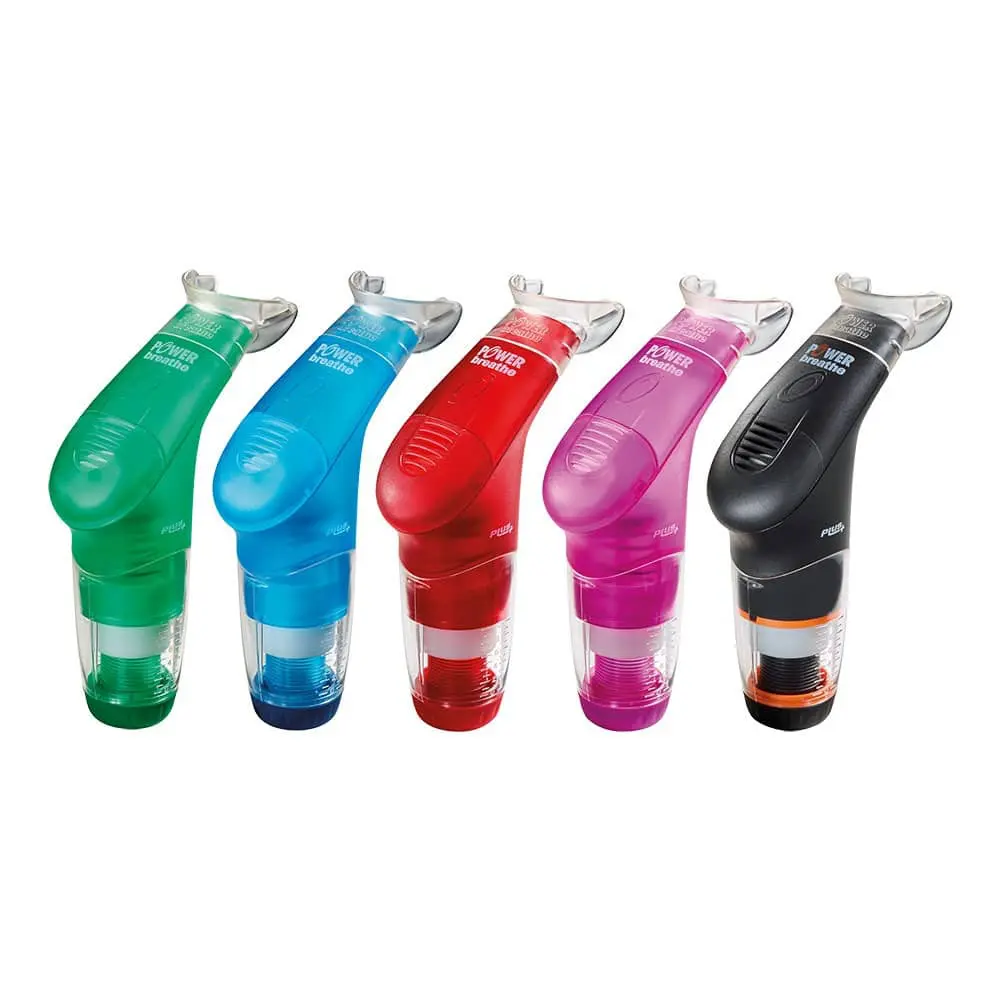
      POWERbreathe breathing muscle training is a clinically-proven method of reducing your asthma symptoms. It can be used alongside your regular asthma medicine and will complement your prescribed medicines, as it is drug-free and has no side effects or drug interactions; just speak to your GP or asthma nurse. 

  • About Asthma

    show

    • Asthma is a condition affecting the small tubes that carry air in and out of the lungs, the airways. When irritated by an asthma trigger, the muscles around the walls of the airways tighten and narrow and the lining starts to swell as they become inflamed, further exacerbated sometimes when phlegm or mucus starts to build up. 

      This irritation and narrowing of the airways may cause you to feel a tightness in your chest causing shortness of breath and other asthma symptoms such as wheezing and coughing.

  • Managing your Shortness of Breath for Asthma

    show
    • It is advised that you follow a written personal action plan to help you manage your asthma symptoms, written in conjunction with your GP or asthma nurse. Your plan could include details about your medicine and your POWERbreathe inspiratory muscle training, as well as emergency information. 

      It may also be beneficial for you to keep a peak flow diary for monitoring your peak flow rate which will help you see if your asthma is under control. A personal peak flow meter will be required. 

      There are many things that you can do to help control your asthma symptoms: 

      • Learn about what triggers your asthma so that you may avoid it 
      • Learn to recognise when your symptoms become less controlled, such as becoming short of breath when doing activities that didn’t leave you breathless before 
      • Attend regular asthma reviews with your GP or asthma nurse 
      • Ensure you use your medication as instructed by your GP or asthma nurse 
      • Follow a healthy diet and drink plenty of water 
      • In consultation with your GP or asthma nurse, exercise. But if exercise triggers your asthma (such as coughing, wheezing or being short of breath) then remember to take your medication as prescribed by your doctor.
  • Exercise-induced Asthma

    show
    • The symptoms of exercise-induced asthma are the same as for asthma, that is a tightness in your chest, coughing, wheezing and difficulty breathing, but with exercise-induced asthma you’ll notice these symptoms begin after you’ve exercised, and probably worsen 15-minutes after you’ve finished exercising. 

      The physical effort of exercise will make your breathing rate increase as your body demands more oxygen which in turn makes it more difficult for your nose and upper airways to warm-up the air and add moisture to the air you breathe in. This means the air you’re breathing in is drier and colder than usual and it is thought that it is this that triggers symptoms of exercise-induced asthma. 

      Outdoor exercise and sport is more likely to trigger these exercise-induced asthma symptoms because the air will be cold, but sports such as swimming and yoga are tolerated more because in swimming the air is warm and humid (if swimming indoors) and yoga will help you focus on your breathing.

      You can help reduce your symptoms of exercise-induced asthma by warming-up first – warming up your inspiratory muscles using POWERbreathe can be very beneficial – avoiding cold air, and taking time to cool-down and recover, again POWERbreathe inspiratory muscle training has been shown to be beneficial.

      More about POWERbreathe for warm-upcool-down and recovery can be found in our sports Training section.

  • Research

    show
Credit Debit cards accepted
© Copyright POWERbreathe International Limited. Website developed by http://www.develodesign.co.uk
Back to TOP